Everything We Get Asked, Written Down Properly
Plain-language guides to hybrid, laminate and SPC flooring — what it is, what it costs to live with, and which floor belongs in which room. Written by people who sell all four, so nothing here is trying to talk you into one of them.
Where to start
Start with what hybrid flooring is if you are new to it, or go straight to the hybrid-versus-laminate comparison if you are choosing between the two. Everything here is evergreen reference material — we revise these pages rather than replacing them.
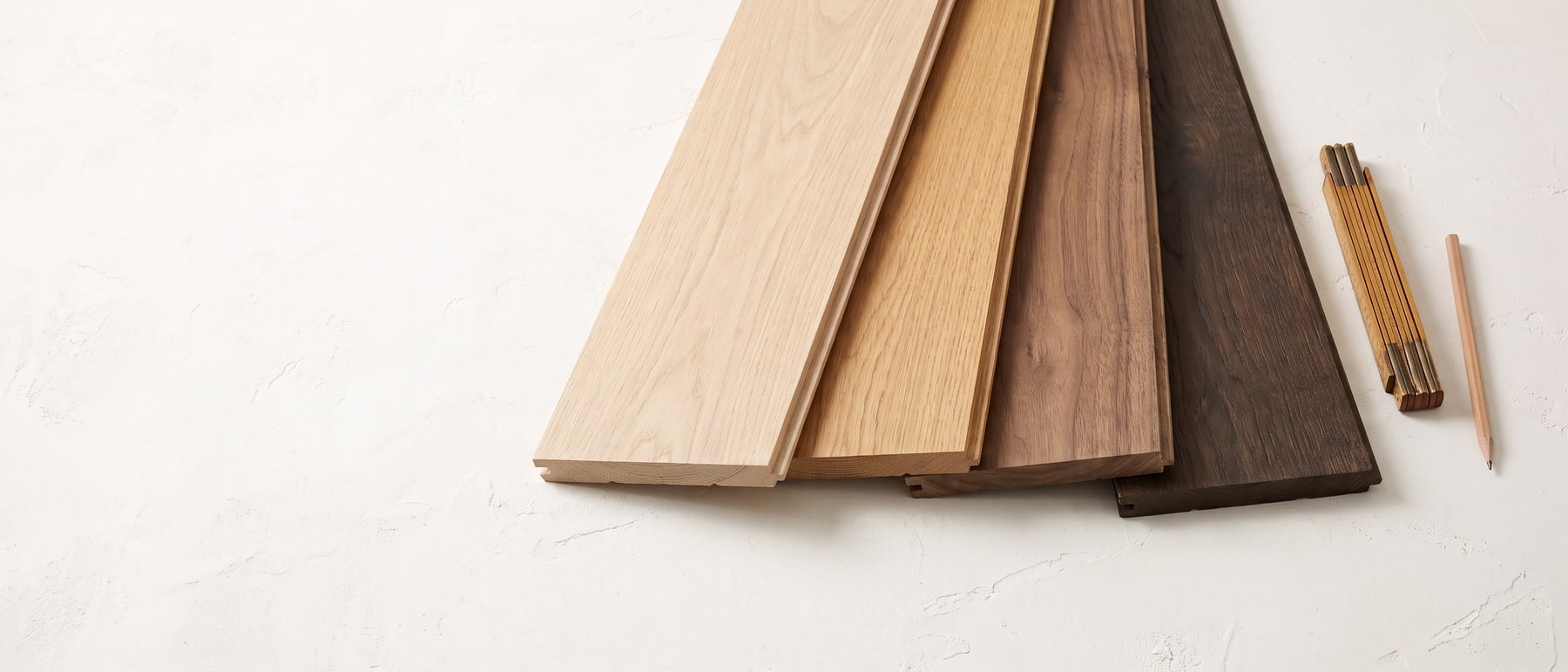
Choosing a floor
What Hybrid Flooring Actually Is (And What It Isn't)
Hybrid flooring is a rigid plank built around a waterproof stone-plastic composite core, with a printed timber-look decor layer, a clear wear layer on top and acoustic underlay already attached underneath. It clicks together as a floating floor, needs no glue or nails, and handles moisture that would destroy a laminate.
Read the guideHybrid or Laminate? We Sell Both, So Here's the Truth
Hybrid has a waterproof stone-plastic core, so it belongs anywhere water gets spilled — kitchens, laundries, entries. Laminate has a dense fibreboard core that gives better impact resistance and a more substantial feel, so it belongs in living areas and bedrooms. The core decides everything else.
Read the guide7mm, 9mm or 12mm — What the Extra Millimetres Buy
Hybrid flooring is usually 7mm to 9mm including its attached underlay, with 12mm products adding either a fibreboard core or a thick vinyl top layer. Thicker buys rigidity over an uneven subfloor, better acoustics and a more solid feel underfoot — not a more durable surface, which is set by the wear layer.
Read the guideSPC or WPC: Why We Only Stock One of Them
SPC is a stone-plastic core: dense, rigid and dimensionally stable. WPC is a wood-plastic core: lighter, softer and warmer underfoot, but more prone to movement with heat. Every range we stock is SPC, because stability matters more than softness in an Australian house.
Read the guideThe AC Rating, and Where the Ladder Actually Stops
AC is an abrasion class from AC1 to AC6 that rates how well a laminate surface resists wear. AC3 covers all domestic use, AC4 adds moderate commercial, AC5 is for heavy commercial. Our TITAN 12mm laminate is AC4, which is more than any home needs.
Read the guideLiving with it
Waterproof, But Not Flood-Proof — the Honest Version
Yes — the stone-plastic core is waterproof and will not swell, warp or delaminate from normal moisture, which is why hybrid suits kitchens and laundries. But waterproof is not flood-proof: water from a burst pipe, a slow leak or a damp slab can still cause damage, and that is usually excluded from warranty cover.
Read the guideThe Floor That Survives a Kitchen
Hybrid, in almost every case. A kitchen combines standing water, dropped weight, point loads from appliances and constant traffic, and hybrid's waterproof stone-plastic core is the only one of our constructions that handles all four without qualification. Laminate is the better floor in a dry room, and a kitchen is not one.
Read the guideHow to Clean a Hybrid Floor Without Ruining It
Sweep or vacuum with a soft brush head, then mop with a well-wrung microfibre mop using plain warm water or a pH-neutral floor cleaner. Do not use a steam mop, harsh chemicals, abrasive pads or a lot of water. That is the entire routine, and it takes about five minutes a room.
Read the guideInstalling it
Installing a Floating Floor, Step by Step
Acclimatise the boxes in the room, check the subfloor is flat to the tolerance in the product's installation documentation, then lay the planks as a floating floor with an expansion gap around every edge. Boards click together — no glue, no nails. The two things that decide the outcome are subfloor preparation and the expansion gap.
Read the guideCan You Lay It Over Tiles? Usually — Here's the Test
Usually yes. A floating floor can go straight over tiles provided they are sound, well bonded and flat to the tolerance in the product's installation documentation, and provided the added height still works at doors and thresholds. Loose or drummy tiles, wide grout lines and height problems are the three reasons to remove them instead.
Read the guideTaking the Old Floor Up (And When to Stop)
Before lifting anything, establish whether the existing floor might contain asbestos — vinyl sheet, vinyl tiles, their backing and their adhesive are all candidates in Australian homes built or renovated before the 1990s. If there is any doubt, stop and have it assessed. Everything else is straightforward.
Read the guideReady to Request a Quote?
Browse the catalogue, shortlist your preferred range, and send us your project details for direct-to-market pricing.