Living with it

The Floor That Survives a Kitchen

Which floor survives a kitchen — spills, dropped pans, a dishwasher that weeps and a fridge that never moves. Hybrid, laminate, and what we would choose.

The short answer

Hybrid, in almost every case. A kitchen combines standing water, dropped weight, point loads from appliances and constant traffic, and hybrid's waterproof stone-plastic core is the only one of our constructions that handles all four without qualification. Laminate is the better floor in a dry room, and a kitchen is not one.

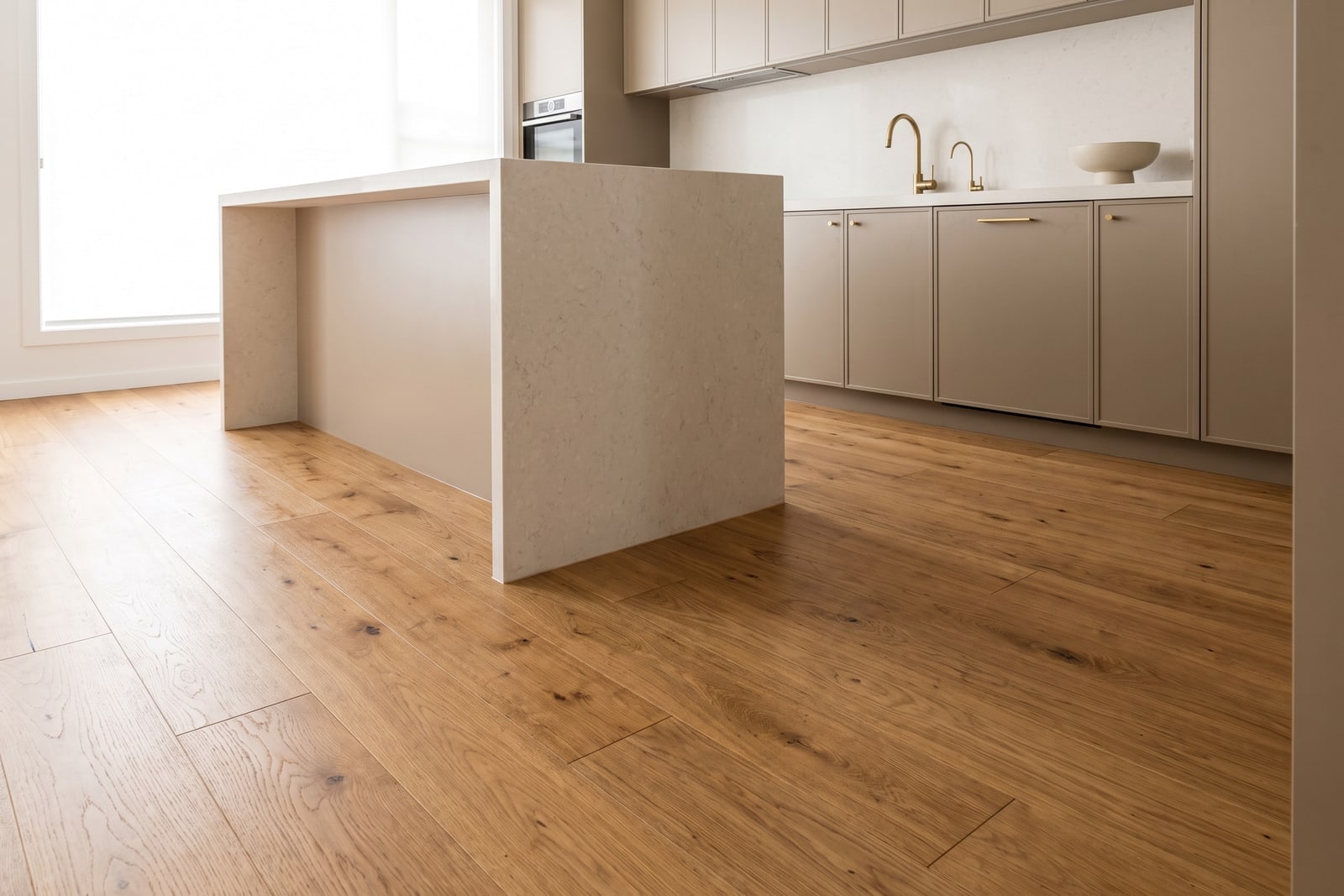
A modern kitchen with a stone-topped island and wide-plank timber-look flooring running unbroken beneath it

Last reviewed September 2026

What a kitchen actually does to a floor

Kitchens punish floors in four distinct ways, and most flooring advice only addresses the first.

  1. Water — not just spills, but the slow ones. A dishwasher seal that weeps, a fridge water line, a leaking mixer tap under the sink. These run for weeks before anyone notices.
  2. Impact — a cast iron pan dropped from bench height concentrates a lot of energy into a very small area.
  3. Point loads — a full fridge sits on four small feet and never moves. So does a range, and so does a stone-topped island.
  4. Traffic and grit — the kitchen is the most-walked room in most houses, and it collects grit from every external door.
Which floor, which room

Filled circle: the one we would choose. Open circle: works. × : we would not. ? : depends on the specific range, so ask for its documents.
Room-by-room suitability of hybrid and laminate flooringHybrid suits kitchens, laundries, entries, living areas and bedrooms. Laminate suits living areas and bedrooms, is workable in kitchens and entries, and is not recommended for laundries or bathrooms. Bathroom suitability for hybrid depends on the specific range.RoomHybridLaminateKitchenDishwasher leaks are the risk, not spillsLaundry×Small room, a machine full of waterEntry / hallwayWet shoes and tracked-in gritLiving / diningEither. Laminate feels more substantialBedroomLaminate is warmer underfootBathroom?×Per range — check its own documentsWaterproof is not flood-proof. A burst pipe or a slow leak under an appliance damages either floor.

Hybrid in a kitchen

This is what we would put down, and the client's own guidance supports it: our hybrid flooring has a waterproof rigid core designed to resist swelling, warping and delamination from normal moisture, and it is suitable for appropriate residential areas such as kitchens and laundries, provided it is correctly installed and maintained.

The dense SPC core also handles point loads well — fridge feet and island legs are exactly the load case a dense core is good at.

The honest limit is impact. A dense core is a hard core, and a heavy pan dropped on an edge can mark a hybrid plank. Nothing at this price point is immune to that.

Laminate in a kitchen

Plenty of people do it, and if the kitchen stays dry it performs well. TITAN's 12mm HDF core gives genuinely better impact resistance than a 7mm hybrid, and AC4 covers the traffic comfortably.

The problem is the failure mode. Laminate has different moisture limitations from hybrid and its own separate care requirements, and when its fibreboard core gets wet it swells permanently. There is no drying it out, no sanding it back — the board is finished.

So the question is not whether laminate survives a kitchen on a good day. It is what happens on the day the dishwasher leaks and nobody notices for a fortnight. On hybrid that is an inconvenience. On laminate it is a new floor.

Laundries

Everything true of a kitchen, more so, in a smaller room with a machine designed to hold sixty litres of water.

Hybrid, without hesitation. And put a tray under the washing machine regardless of what floor you choose — it is the single cheapest piece of insurance in the house.

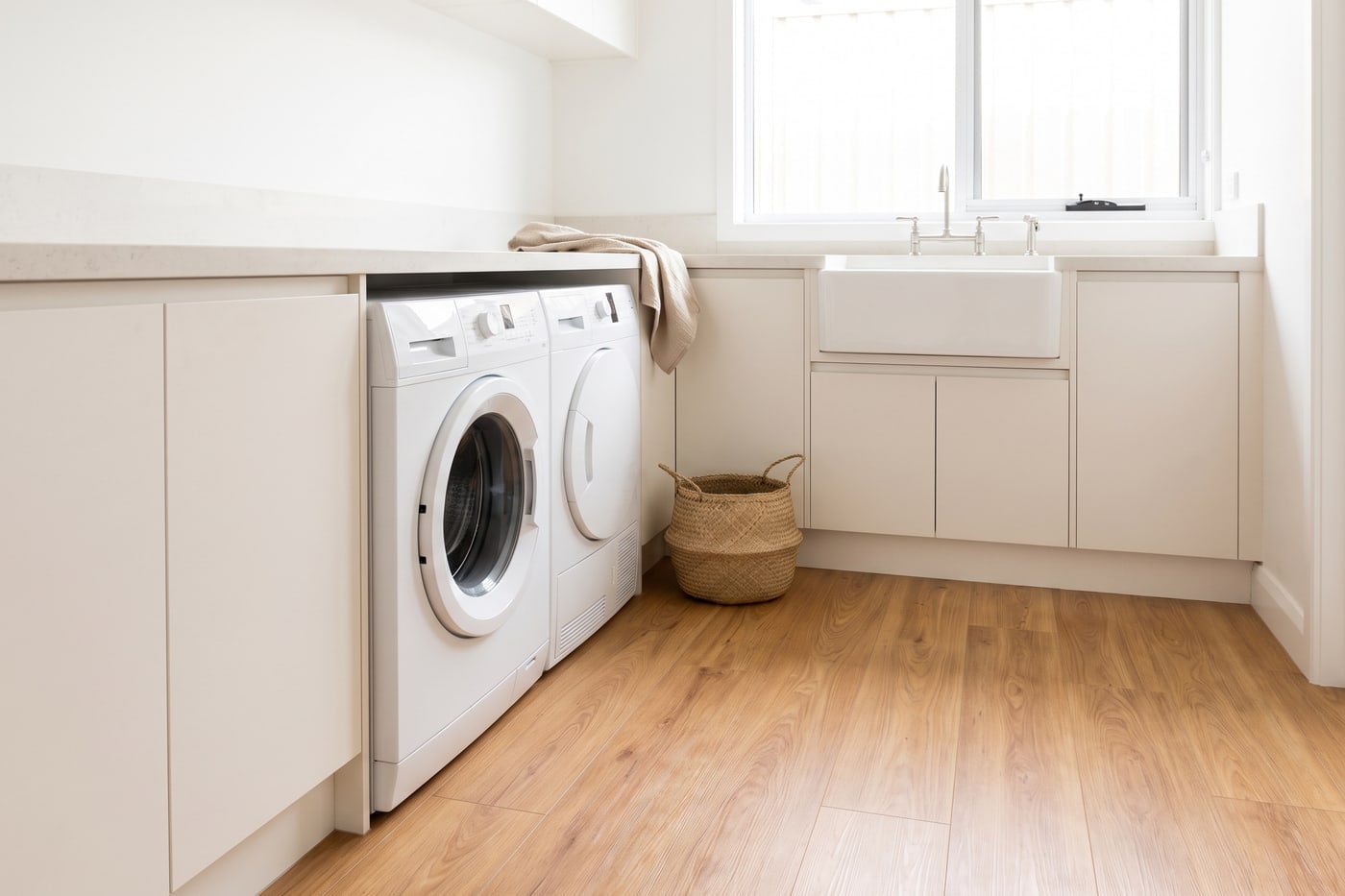
A modern laundry with a front-loading washing machine and timber-look flooring running unbroken across the floor

Bathrooms are a different question

People often plan kitchen, laundry and bathroom as one flooring decision. They are not the same decision.

A bathroom adds standing water, steam, a floor waste and usually a waterproofing membrane the floor has to work with. Suitability there comes from the individual range's installation and warranty requirements rather than from the category.

Appliances, islands and point loads

A floating floor is not fixed down, which changes how heavy fixed objects should be handled.

A stone-topped island should sit on the subfloor, not on the floating floor, wherever the design allows. A floor that is pinned under a heavy fixed object cannot move as a sheet, and a floating floor that cannot move is a floor that will buckle somewhere else.

Fridges and ranges that slide in and out need care on the way in. Most damage happens during installation of the appliance, not during its life. Put hardboard down before sliding anything heavy.

Mats, castors and the things that actually cause damage

Grit is the main agent of wear. A doormat at every external door removes most of it before it reaches the kitchen.

Bar stools on a hard castor will mark a floor faster than anything else in the room. Felt pads on stool feet, or soft rubber castors, solve it entirely.

Avoid rubber-backed mats sitting permanently in one spot on a hybrid floor — some rubber compounds can discolour a vinyl wear layer over time. A woven mat with a felt backing is safer.

Keeping it looking right

A damp, well-wrung microfibre mop with plain warm water or a pH-neutral cleaner handles a kitchen floor. Avoid harsh chemicals, abrasive pads and excessive water.

Steam mops should not be used unless specifically permitted by the product's care and warranty documentation. Waterproof flooring does not automatically mean steam cleaning is suitable, and a kitchen is exactly where people are most tempted to reach for one.

What we would put in our own kitchen

AXEN 9mm. The extra core thickness over SILVA 7mm buys rigidity under appliance loads and a slightly quieter, more solid feel in the room you stand in most, and the 2mm acoustic IXPE is genuinely noticeable underfoot.

If budget is the deciding factor, SILVA 7mm in a kitchen is a perfectly sound decision and we would not talk anyone out of it.

If the kitchen opens onto living areas and you want one continuous floor throughout — which almost always looks better than a threshold strip — hybrid is the choice that works in every room it will run through.

Common questions

What is the best flooring for a kitchen?

Hybrid, in most Australian homes. Its waterproof core handles the one failure mode that ends floors in kitchens — a slow leak nobody notices — while its density copes with appliance point loads and traffic.

Can you use laminate in a kitchen?

Yes, and it performs well while it stays dry. The risk is that laminate's fibreboard core swells permanently once water reaches it, so a leak that goes unnoticed means replacement rather than repair.

Is hybrid flooring good for laundries?

Yes — it is the room where a waterproof core matters most. Put a tray under the washing machine as well, whatever floor you choose.

Should the kitchen island sit on the floating floor?

Preferably not. Where the design allows, a heavy fixed island should sit on the subfloor so the floating floor can still move as a sheet around it.

Will a dropped pan damage hybrid flooring?

It can mark it, particularly on an edge. A dense core is hard rather than shock-absorbing, and nothing in this category is impact-proof. Thicker cores handle it better.

Can I use a steam mop on my kitchen floor?

No, not unless the product's care and warranty documentation specifically permits it. Waterproof does not mean steam-safe, and heat plus moisture is a different stress from a spill.

Ready to Request a Quote?

Browse the catalogue, shortlist your preferred range, and send us your project details for direct-to-market pricing.