Living with it

How to Clean a Hybrid Floor Without Ruining It

Damp microfibre, pH-neutral cleaner, no steam. The routine that keeps a hybrid floor looking new, and the four things that quietly ruin one.

The short answer

Sweep or vacuum with a soft brush head, then mop with a well-wrung microfibre mop using plain warm water or a pH-neutral floor cleaner. Do not use a steam mop, harsh chemicals, abrasive pads or a lot of water. That is the entire routine, and it takes about five minutes a room.

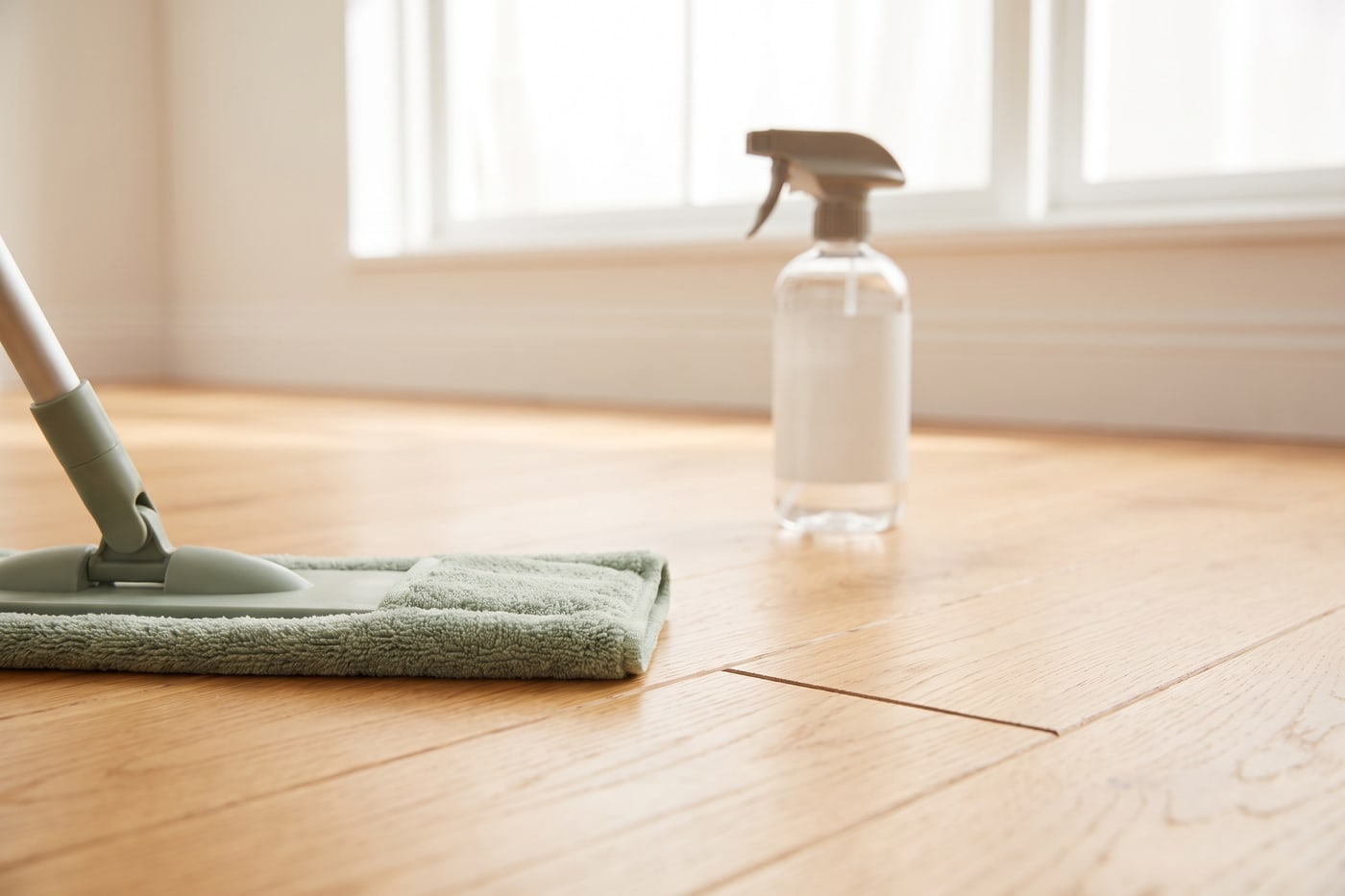
A flat microfibre mop head resting on a clean wide-plank timber-look floor in a sunlit room

Last reviewed September 2026

The whole routine

There is not much to it, and that is the point of the product.

  1. Daily or as needed — sweep, or vacuum with a soft brush attachment and the beater bar off.
  2. Weekly — mop with a damp, well-wrung microfibre mop, using plain warm water or a pH-neutral floor cleaner.
  3. As needed — wipe spills promptly. Not urgently, but promptly.
  4. Twice a year — check the felt pads under furniture and replace any that have worn through or collected grit.
Grit does the damage, not dirt

The thing that actually wears a floor is sand and grit tracked in on shoes. Walked across a surface, it acts like fine sandpaper, and it dulls a wear layer far faster than any amount of ordinary use.

Which means the highest-value floor maintenance you can do is not cleaning at all — it is stopping grit at the door. A decent mat at every external entrance removes most of it.

This is also why sweeping before mopping matters. Mopping a gritty floor drags the grit around under the mop head.

What to use

A flat microfibre mop, wrung out until it is damp rather than wet. Plain warm water handles most of it; a pH-neutral floor cleaner handles the rest.

pH-neutral matters. Strongly alkaline cleaners — including some general-purpose sprays and most oil soaps — can dull a wear layer or leave a film that attracts dirt faster than the floor did before you cleaned it.

If the floor looks streaky or feels tacky after cleaning, you are using too much product or too much water, not too little.

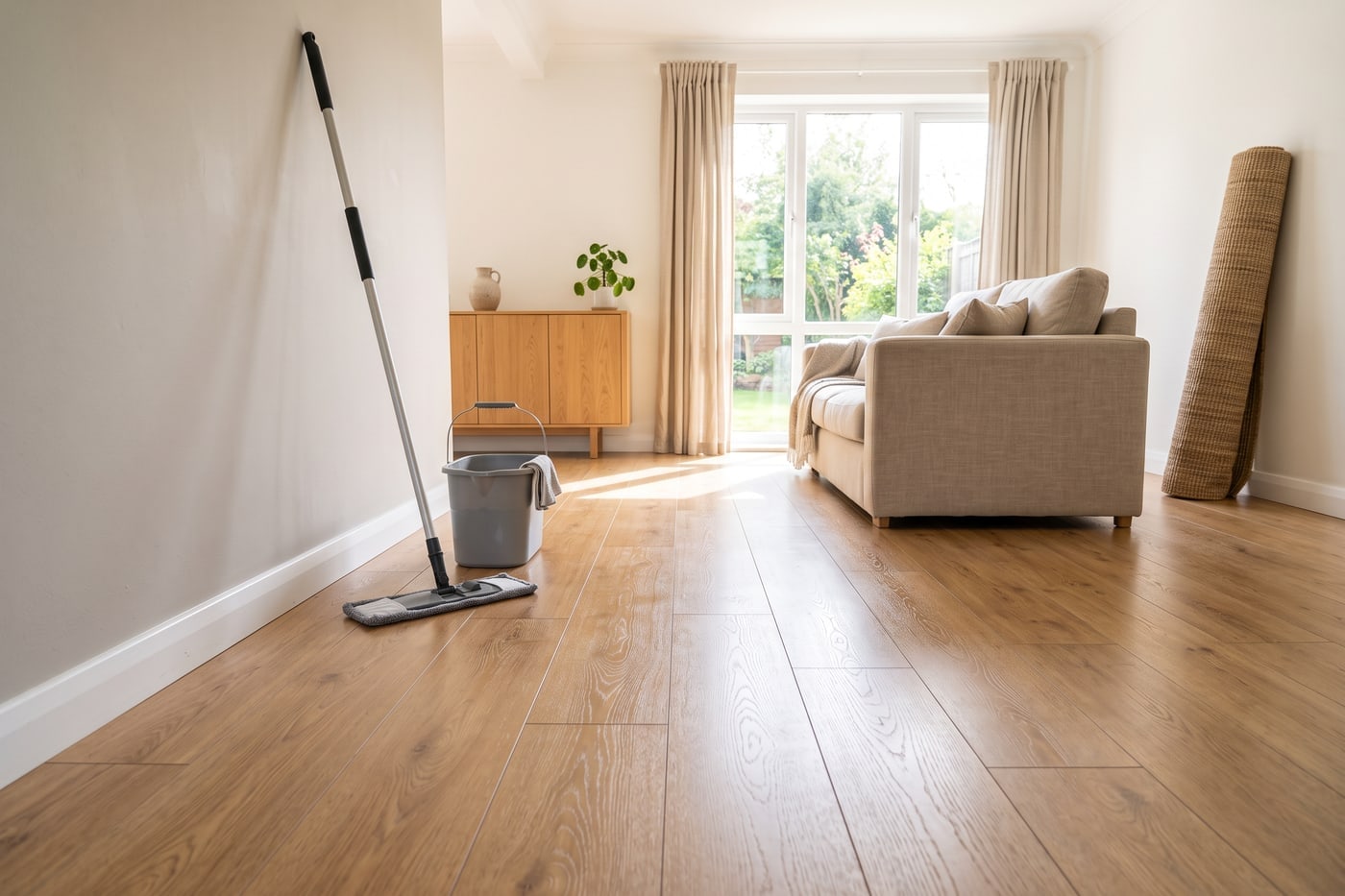
A microfibre mop and bucket beside a freshly cleaned timber-look floor in a sunlit living room

Steam mops: no

Steam mops should not be used unless specifically permitted by the applicable product care and warranty documentation.

Waterproof flooring does not automatically mean steam cleaning is suitable. That is the confusion the whole category suffers from, and it is worth stating plainly: a waterproof core resists water. A steam mop applies heat and pressurised moisture, which is a different stress entirely, and heat is what can affect the adhesive bonds between a plank's layers.

We recommend avoiding steam mops and excessive water when maintaining the flooring. The final care requirements come with each collection's warranty and maintenance documentation.

The four things that quietly ruin a floor

None of these are dramatic. They are all slow.

  1. Excessive water — a sopping mop leaves water sitting in joints and running into the perimeter gap. Wring it out properly.
  2. Harsh chemicals — bleach, ammonia, solvent cleaners and strongly alkaline products can dull or discolour a wear layer.
  3. Abrasive tools — scouring pads, steel wool and stiff brushes leave fine scratches that catch dirt and read as a dull patch within months.
  4. Rubber-backed mats left permanently in one place — some rubber compounds can discolour a vinyl wear layer over time. Use a felt or woven backing instead.

Getting marks out

Scuffs from shoes usually come off with a dry microfibre cloth, or with a little pressure and a damp one. Do not reach for an abrasive.

Grease near a cooktop needs a pH-neutral cleaner and a bit of dwell time rather than scrubbing.

Pet accidents should be cleaned promptly with an enzymatic cleaner, mainly for odour — the floor itself will be fine.

Rubber marks from castors or shoe soles are the stubborn ones. A soft cloth with a small amount of isopropyl alcohol usually lifts them; test in a corner first.

Preventing scratches

Felt pads under every chair leg, and check them twice a year. A felt pad that has worn through or embedded a piece of grit is worse than no pad at all.

Soft rubber castors rather than hard plastic on anything that rolls — office chairs and bar stools are the usual offenders.

Keep pet nails trimmed. Hybrid handles claws better than timber, but nothing is scratch-proof.

Put hardboard down before sliding an appliance in or out. Most serious scratches happen during a delivery, not during ordinary life.

Scratches, dents and repair kits

A light surface scratch in the wear layer usually cannot be repaired, but it also usually cannot be seen from standing height. Deeper damage through the decor layer means replacing the plank.

On a floating floor, replacing a single board is genuinely feasible — the floor can be unclicked back to the damaged plank and reassembled, which is one of the underrated advantages of the construction.

Spare planks, and why you should keep offcuts

Spare and replacement planks can be purchased subject to current stock availability.

But keep the offcuts from your original installation if you possibly can. Normal production-batch variation means a plank bought two years later may not match exactly, even in the same colour from the same range — that is true of every manufacturer, and anyone claiming otherwise is guessing.

A few spare boards in the garage is the cheapest insurance against a future repair looking like a repair.

Care requirements by collection

Everything above is the general routine and it applies across our ranges. Laminate has different moisture limitations from hybrid and its own specific care requirements.

The SILVA and AXEN warranty documents name the cleaning failures that void cover, and they are worth knowing because most of them look harmless: steam mops, abrasive cleaners and pads, waxes, polishes, strong solvents, and excessive water. Steam mops are the one people are most surprised by — forcing hot vapour into a click joint is exactly the moisture path the core was never meant to seal.

The matching installation guides also ask for felt protectors under furniture and entrance mats at doorways. Grit tracked in from outside is the single largest cause of wear-layer damage, and the warranties exclude damage caused by grit and sand — it is not a manufacturing defect.

TITAN's care document is being finalised. Ask us for the one covering your range and we will send it.

Common questions

Can you steam mop hybrid flooring?

No, not unless the product's care and warranty documentation specifically permits it. Waterproof does not mean steam-safe — heat plus pressurised moisture is a different stress from a spill, and heat can affect the bonds between a plank's layers.

What is the best mop for hybrid floors?

A flat microfibre mop, wrung out until it is damp rather than wet. Plain warm water or a pH-neutral floor cleaner is all it needs.

How do I clean hybrid floors without streaks?

Streaks almost always mean too much product or too much water. Sweep first, use less cleaner, wring the mop out harder, and change the water when it gets dirty.

Can hybrid flooring be repaired?

A damaged plank can be replaced — on a floating floor you can unclick back to it and reassemble. Surface scratches in the wear layer generally cannot be repaired, though they are rarely visible from standing height.

Can I buy spare planks later?

Yes, subject to stock availability. Keep offcuts from the original installation where you can, because normal batch variation means a later plank may not match exactly.

What cleaners should I avoid?

Bleach, ammonia, solvent-based cleaners, oil soaps and strongly alkaline general-purpose sprays. Also avoid abrasive pads and steel wool, which leave scratches that collect dirt.

Ready to Request a Quote?

Browse the catalogue, shortlist your preferred range, and send us your project details for direct-to-market pricing.