
Living with it

Waterproof, But Not Flood-Proof — the Honest Version

The core is waterproof. The floor is not flood-proof. Here is the difference, where water actually gets in, and what a warranty will and will not cover.

The short answer

Yes — the stone-plastic core is waterproof and will not swell, warp or delaminate from normal moisture, which is why hybrid suits kitchens and laundries. But waterproof is not flood-proof: water from a burst pipe, a slow leak or a damp slab can still cause damage, and that is usually excluded from warranty cover.

Water droplets beaded on the surface of a timber-look flooring plank, sitting proud without soaking in

Last reviewed September 2026

What waterproof actually means here

It is a claim about the core, and it is a real one. Hybrid's stone plastic composite core is limestone and PVC — there is no wood fibre in it to absorb water. Submerge a offcut in a bucket for a week and it comes out the same size it went in.

That is a genuine, testable difference from laminate, whose fibreboard core swells irreversibly once water reaches it. It is why our hybrid ranges are designed to resist swelling, warping and delamination from normal moisture exposure, and why they are suitable for appropriate residential areas such as kitchens and laundries when correctly installed and maintained.

A spill on hybrid is a non-event. A dog bowl that tips while you are out is a non-event. A dishwasher that weeps for an afternoon is survivable. That covers the overwhelming majority of what actually happens to floors.
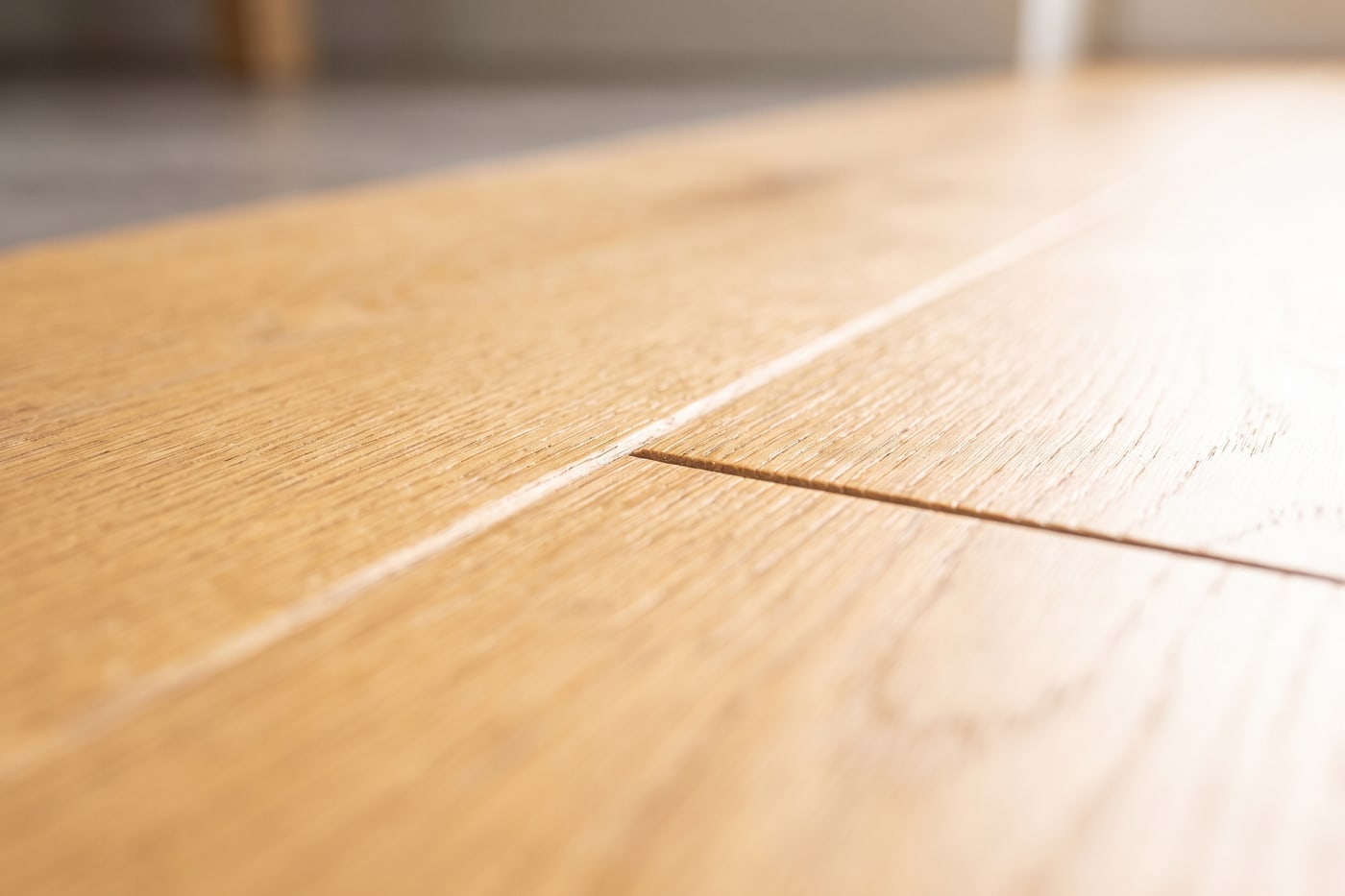
Close-up of the joint between two wide timber-look flooring planks, showing the tight seam and bevelled plank edges

What it does not cover

Waterproof does not mean flood-proof, and this is the distinction that matters when something goes wrong.

Damage resulting from flooding, leaking plumbing, water entering through the subfloor, prolonged water saturation or other uncontrolled moisture conditions may be excluded from warranty coverage. That is not fine print we are hiding — it is the honest limit of the product, and it is the same limit every hybrid on the market has.

The reason is that a floating floor is a system, not a single sheet. The planks are waterproof. The joints between them, the perimeter gap, and the subfloor underneath are not.

Where water actually gets in

Three routes, and none of them is through the plank itself.

  1. Through the joints. Click joints are tight, not sealed. Water standing on the surface for hours will eventually find its way between boards and sit underneath, where it has nowhere to evaporate to.
  2. Around the perimeter. The expansion gap behind your skirting is an open channel into the space under the floor. Water running along a wall — from a leaking dishwasher, a fridge line, or an overflowing washing machine — goes straight down it.
  3. Up from below. A concrete slab without an adequate moisture barrier can pass moisture vapour continuously into the underside of the floor. The plank will not swell, but sustained moisture underneath causes other problems, including odour and adhesive failure in the attached underlay.
Where water actually gets in

Never through the plank. Through the joint between boards, down the perimeter expansion gap, or up out of the slab.

Section through a floating floor showing three routes for waterWater reaches the underside of a floating floor through the joint between planks, down the expansion gap behind the skirting, or as vapour rising from the concrete slab below.Wall & skirtingConcrete slab1 — through the joint2 — down the expansion gap3 — vapour rising from the slabThe core never absorbs it. The problem is always what sits underneath.

Laminate is a different conversation

Our TITAN 12mm is laminate, not hybrid, and it has different moisture limitations and its own separate care requirements.

The surface resists a spill wiped up promptly. The high-density fibreboard core does not tolerate water reaching it, and swelling from that is permanent — a swollen laminate board cannot be dried back into shape.

So the guidance genuinely differs by product, and anyone telling you "our floors are waterproof" across a whole catalogue is flattening a real distinction.

Bathrooms and wet areas

This is the question we get asked most, and it is the one where a blanket answer would be doing you a disservice.

Wet-area suitability depends on the individual range and its installation and warranty requirements, not on the category as a whole. A bathroom involves standing water, steam, a floor waste, and often a waterproofing membrane the flooring has to work with rather than against.

Kitchens and laundries

These are where hybrid earns its place, and where we are comfortable saying so.

Our hybrid flooring is suitable for appropriate residential areas such as kitchens and laundries, provided it is correctly installed and maintained. The waterproof core handles the spills, splashes and mopping these rooms generate.

Two practical additions that matter more than the product choice: put a tray under the washing machine, and check behind the dishwasher occasionally. Almost every serious water incident on a kitchen floor is a slow leak nobody noticed for weeks, not a dramatic spill.

What to do when something leaks

Stop the water first, then get it off the floor. Standing water is the enemy; a wiped-up spill is nothing.

If water has run along a wall or under an appliance, lift the scotia at that section and check whether water has gone into the perimeter gap. Getting air to it early is the difference between a dry-out and a repair.

If water has been sitting for days, or has come up through the slab, call us before pulling anything up. What looks like floor damage is often subfloor damage, and lifting boards without knowing which you are dealing with makes the assessment harder.

How long it lasts

Water is rarely what ends a hybrid floor's life — wear is. The wear layer thins gradually under traffic and grit, and that is what eventually dulls a floor.

Keeping grit off the surface does more for longevity than anything else. A doormat at each external door is the cheapest floor-protection product available.

What the warranty covers

Warranty terms are specific to each collection rather than one period across the range, and they distinguish residential from commercial use. SILVA 7mm and AXEN 9mm each carry a 25-year residential warranty and a 10-year limited commercial warranty.

The part worth reading before you rely on the word waterproof is how both documents qualify it. The waterproof claim covers the SPC material under normal household moisture exposure. It does not mean the installed floor or the building is flood-proof as a complete system — and the exclusions say so directly.

Flooding, plumbing leaks, water entering from beneath or through the subfloor, prolonged saturation, standing water left unattended, hydrostatic pressure and building moisture problems are all outside the warranty. So is damage from steam mops. That is not fine print designed to catch you out; it is the honest boundary of what a waterproof core can do when the water is arriving from a direction the floor was never sealed against.

TITAN 12mm Laminate has its own warranty document, currently being finalised, and its moisture tolerance is materially lower than either hybrid. EVSPC carries its supplier's warranty — 25-year structural and 10-year wear layer, residential.

Common questions

Can hybrid flooring get wet?

Yes. The core is waterproof and will not swell from spills, mopping or normal moisture. What it will not survive indefinitely is standing water that works into the joints or sits underneath the floor.

Is hybrid flooring 100% waterproof?

The plank is. The floor as a system is not — joints, the perimeter expansion gap and the subfloor beneath are all routes water can take. Flooding, plumbing leaks and prolonged saturation are generally excluded from warranty cover.

Can I put hybrid flooring in a bathroom?

It depends on the specific range. Wet-area suitability comes from each collection's installation and warranty requirements rather than from the category, so ask us for the documentation covering the range you are considering.

Is laminate flooring waterproof?

No. Laminate is water-resistant at the surface, but its fibreboard core swells permanently once water reaches it. That is the main practical difference between laminate and hybrid.

What happens if my dishwasher leaks onto hybrid flooring?

A short leak cleaned up promptly usually causes no damage at all. A slow leak running for weeks, particularly one draining into the perimeter gap, can damage the subfloor and is generally excluded from warranty cover.

How long does hybrid flooring last?

Wear rather than water usually decides it, and wear-layer thickness is the main predictor. Keeping grit off the surface with doormats does more for longevity than anything else.

Ready to Request a Quote?

Browse the catalogue, shortlist your preferred range, and send us your project details for direct-to-market pricing.