Choosing a floor

Hybrid or Laminate? We Sell Both, So Here's the Truth

We sell both, so here is the honest comparison — core, water resistance, sound, wear rating and which one belongs in which room of an Australian home.

The short answer

Hybrid has a waterproof stone-plastic core, so it belongs anywhere water gets spilled — kitchens, laundries, entries. Laminate has a dense fibreboard core that gives better impact resistance and a more substantial feel, so it belongs in living areas and bedrooms. The core decides everything else.

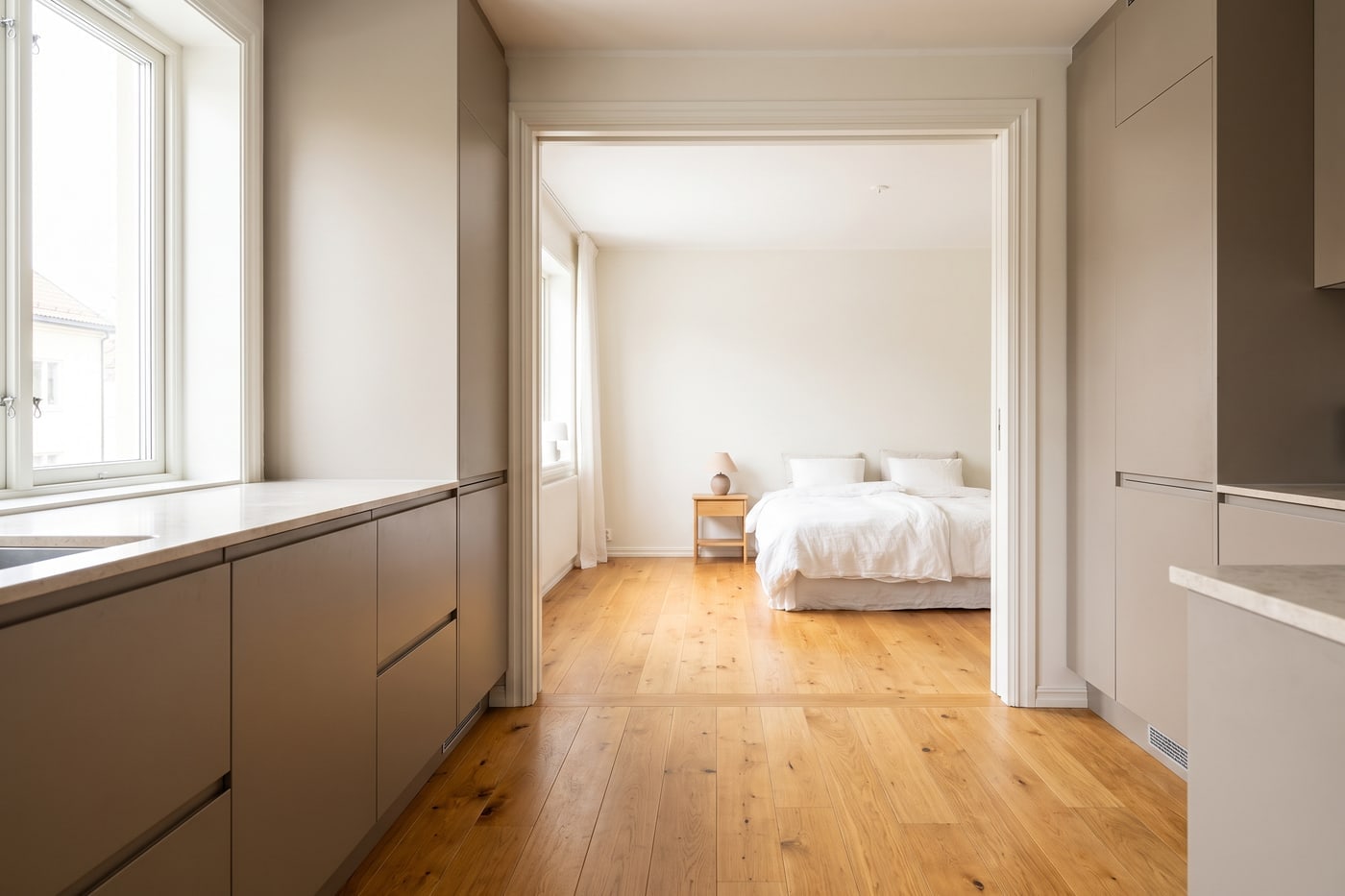
A kitchen and a bedroom seen through a wide doorway, with the same timber-look flooring running continuously through both

Last reviewed September 2026

The short comparison

Most of the differences between these two floors come from one decision the manufacturer made about the core. Everything else follows.

  1. Core — hybrid is stone plastic composite (limestone and PVC); laminate is high-density fibreboard (compressed wood fibre).
  2. Water — hybrid's core is waterproof and does not swell; laminate's core absorbs water and swells permanently once it does.
  3. Wear rating — laminate is rated on the AC scale (ours is AC4); hybrid is measured by wear-layer thickness in millimetres. Different scales, not comparable numbers.
  4. Sound — hybrid arrives with acoustic underlay attached; laminate needs a separate underlay, which on concrete must include a moisture barrier.
  5. Feel — 12mm laminate reads as more substantial and warmer underfoot; hybrid is denser, harder and quieter.
  6. Rooms — hybrid for wet and high-traffic areas; laminate for bedrooms, living rooms and anywhere that stays dry.
The core: SPC against HDF

A hybrid core is stone plastic composite — limestone powder bound with PVC, extruded into a rigid, dense board. It is a mineral-plastic product with no wood in it at all.

A laminate core is high-density fibreboard: wood fibre compressed under heat and pressure into a very dense board. It is genuinely made of wood, which is both its advantage and its limit.

HDF is harder than most people expect and gives laminate excellent resistance to impact and denting — a dropped pan is more likely to mark a hybrid than a 12mm laminate. But HDF is still wood fibre, and wood fibre drinks water.

Two cores, one decision

Stone plastic composite against high-density fibreboard. Everything else that separates hybrid from laminate follows from this.

Stone plastic composite core compared with high-density fibreboard coreThe SPC core is mineral and PVC, so water sits on it and it does not swell. The HDF core is compressed wood fibre, so water is absorbed and the board swells permanently.Hybrid — SPC coreLimestone powder bound with PVCWater sits on itNo swelling. Nothing to absorb.Laminate — HDF coreCompressed wood fibreswellsWater goes into itSwelling is permanent.

Water: waterproof against water-resistant

This is the whole argument, and the words matter. Hybrid's core is waterproof: submerge a piece and it will not swell. Laminate is water-resistant at best: the surface sheds a spill wiped up promptly, but water that reaches the core through a joint or an edge causes swelling that does not reverse.

The practical test is time. On laminate, a spill is fine and a puddle left overnight is a problem. On hybrid, the spill is a non-event and the puddle is survivable.

Neither is flood-proof. A burst pipe or moisture rising through a slab will damage both, and that kind of damage is generally excluded from warranty cover on either product.

Wear ratings, and why you cannot compare the numbers

Laminate is rated on the AC scale — an abrasion class from AC1 to AC6. Our TITAN 12mm laminate is AC4, which covers heavy domestic and moderate commercial use.

Hybrid is not rated on that scale at all. Its durability is described by wear-layer thickness in millimetres.

So a specification sheet saying "AC4" and one saying "0.5mm wear layer" are not two points on one scale — they are two different measurements of two different constructions. Comparing them directly is the most common mistake people make when shopping these two products against each other.

Sound and underlay

Hybrid arrives with IXPE acoustic underlay bonded to the plank — 1.5mm on SILVA 7mm, 2mm on AXEN 9mm. Nothing to buy, nothing to lay, and the acoustic performance is built into the product.

Laminate needs a separate underlay, and on a concrete subfloor that underlay must include a moisture barrier. That is an extra product, an extra cost and an extra decision.

For apartments and anything with a body corporate, this is where hybrid usually wins on paperwork alone. Ask us for the acoustic test reports for the range you are considering so they can be checked against your building's actual requirement.

How they feel underfoot

Laminate at 12mm feels substantial and slightly warmer. The HDF core has some give, and a thicker board over a good underlay reads as solid.

Hybrid is denser and harder. It is quieter — no hollow click — but it is also less forgiving underfoot over a long day standing at a bench. The attached underlay takes the edge off rather than removing it.

This is genuinely a preference rather than a quality difference, and it is the one thing you cannot judge from a website. Handle both before choosing.

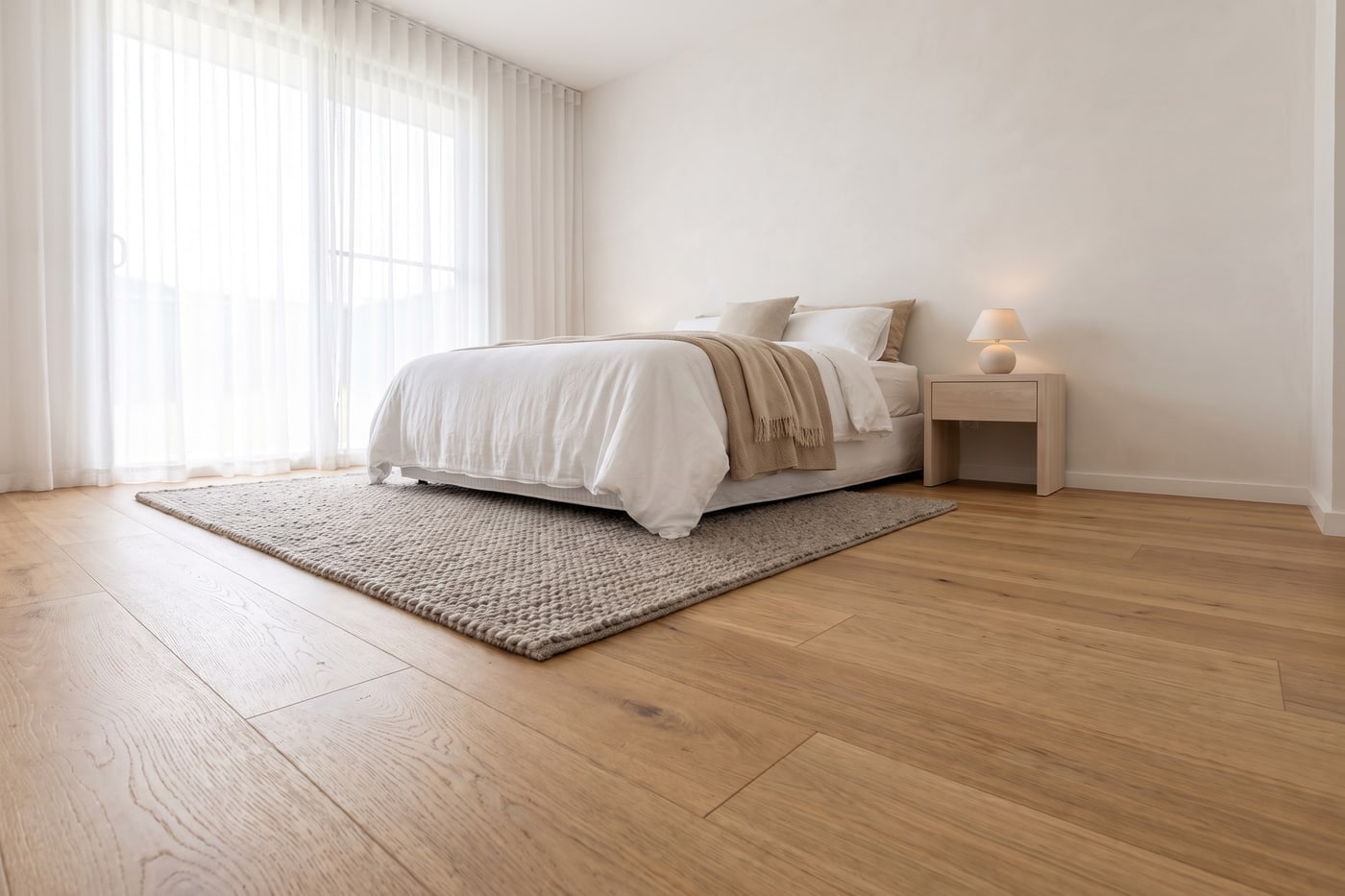
A calm bedroom with wide-plank timber-look flooring, white linen and a soft wool rug

What drives the cost of each

We do not publish per-square-metre pricing, because it varies by range, quantity and customer type, and a headline figure would be wrong for most people reading it. What is worth understanding is what moves the number.

On hybrid, wear-layer thickness and core thickness are the main drivers. A thicker wear layer costs more and lasts longer, and that trade is usually worth making in a busy house.

On laminate, the AC rating and board thickness drive it, and you have to add the separate underlay into any honest comparison.

Installation cost is broadly similar — both are floating floors that click together — but subfloor preparation can differ, and preparation is usually the variable that actually moves a quote.

Room by room

Kitchen — hybrid. Dishwashers leak, and this is the room where the core difference earns its money.

Laundry — hybrid, for the same reason, and more so.

Living and dining — either. Laminate's impact resistance and feel are genuine advantages in a room that stays dry.

Bedrooms — either, and this is where laminate's warmth underfoot is most noticeable.

Entry and hallway — hybrid, for wet shoes and traffic.

Bathroom — check the specific range rather than the category. Wet-area suitability depends on the individual product's installation and warranty requirements, and it is not a claim we will make across the board.

Which floor, which room

Filled circle: the one we would choose. Open circle: works. × : we would not. ? : depends on the specific range, so ask for its documents.

Room-by-room suitability of hybrid and laminate flooringHybrid suits kitchens, laundries, entries, living areas and bedrooms. Laminate suits living areas and bedrooms, is workable in kitchens and entries, and is not recommended for laundries or bathrooms. Bathroom suitability for hybrid depends on the specific range.RoomHybridLaminateKitchenDishwasher leaks are the risk, not spillsLaundry×Small room, a machine full of waterEntry / hallwayWet shoes and tracked-in gritLiving / diningEither. Laminate feels more substantialBedroomLaminate is warmer underfootBathroom?×Per range — check its own documentsWaterproof is not flood-proof. A burst pipe or a slow leak under an appliance damages either floor.

Which we would put where

In a typical Australian home renovating throughout, we would run hybrid through the kitchen, laundry, entry and living areas, and consider laminate in bedrooms if the warmth and feel matter to you.

If you want one floor everywhere — which most people do, because a continuous floor looks better and avoids threshold strips — choose hybrid. It handles every room in the house, and the rooms where laminate is better are rooms hybrid is still perfectly good in.

The reverse is not true. Laminate in a laundry is a decision you will eventually regret.

Common questions

Which is better, hybrid or laminate?

Neither, in the abstract. Hybrid is better wherever water is a risk, which in most homes means most of the house. Laminate is better on impact resistance and feel underfoot in dry rooms.

Is hybrid more expensive than laminate?

Not necessarily, and the comparison is not straightforward — hybrid includes its underlay, laminate needs one bought separately. Specification within each type moves the price more than the choice between types.

Can I use laminate in a kitchen?

You can, and plenty of people do, but it is the room where its limits show. A dishwasher leak that goes unnoticed for a day will swell a laminate core permanently. Hybrid is the safer choice there.

Does laminate need underlay?

Yes, always, and on a concrete subfloor the underlay must include a moisture barrier. Hybrid does not — its acoustic underlay is bonded to the plank at the factory.

Which is better for apartments?

Hybrid, generally, because the acoustic underlay is built in and the test documentation is straightforward to supply to a body corporate. Ask us for the acoustic reports for the specific range and check them against your building's requirement.

Which looks more like real timber?

A 12mm laminate usually reads as more substantial because of the board thickness and the deeper embossing. Both use printed decor films, so both repeat their grain pattern across a run of boards.

Ready to Request a Quote?

Browse the catalogue, shortlist your preferred range, and send us your project details for direct-to-market pricing.