Installing it

Taking the Old Floor Up (And When to Stop)

Taking up vinyl, carpet, tiles or floating boards before a new floor goes down — including the asbestos check that has to come first.

The short answer

Before lifting anything, establish whether the existing floor might contain asbestos — vinyl sheet, vinyl tiles, their backing and their adhesive are all candidates in Australian homes built or renovated before the 1990s. If there is any doubt, stop and have it assessed. Everything else is straightforward.

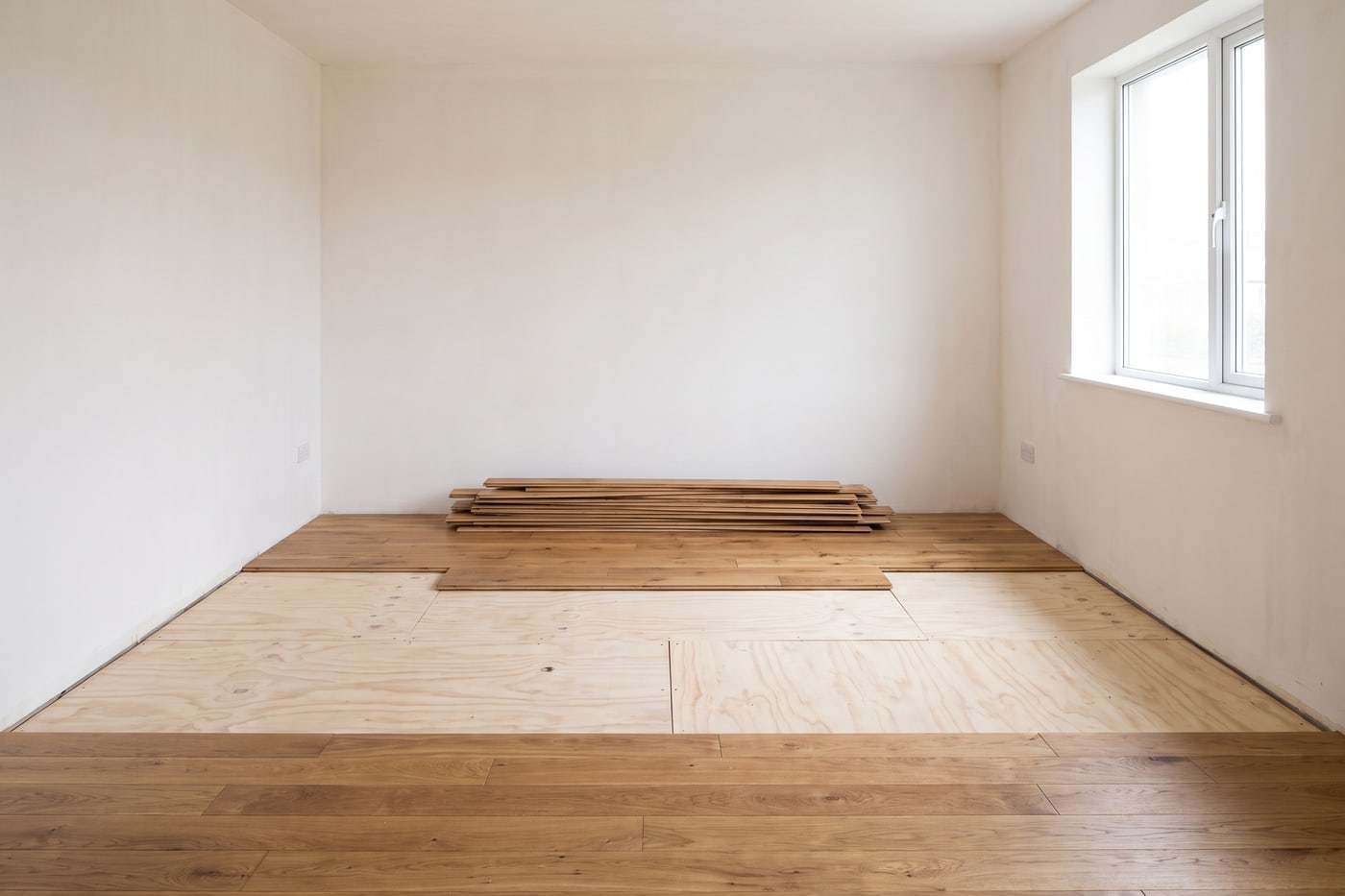
An empty room mid-renovation, a section of floating floor lifted to reveal plywood subfloor, boards stacked to one side

Last reviewed September 2026

The asbestos check comes first

This is not a formality and it is not something to work around. In Australian homes built or renovated before the 1990s, asbestos was widely used in vinyl sheet flooring, in vinyl and lino tiles, in the backing beneath them, and in the adhesives used to stick them down. Some fibre-cement underlays contain it too.

Asbestos is dangerous when it is disturbed, because that is when fibres become airborne. Lifting, scraping, sanding, cutting or breaking suspect material is exactly the activity that releases them.

If existing flooring, adhesive, backing or other material is suspected of containing asbestos, it must not be disturbed or removed until it has been appropriately assessed. Our installers will not touch it.

Where asbestos is identified or suspected, you will need to arrange assessment and, where required, removal by a suitably qualified and licensed asbestos professional before flooring installation proceeds. That is not a step we can work around, and it is not one we will quietly skip to keep a schedule.

You cannot identify asbestos by looking at it. Age and material type tell you whether to be suspicious; only a test tells you the answer. If the house is old enough for the question to arise, get it tested before anyone lifts a board.

Before you lift anything

There is no path through this that ends in removing suspect material yourself. Our installers will not disturb it either.
Decision chart for suspected asbestos in an existing floorIf the house predates the 1990s and the existing floor is vinyl sheet, vinyl tiles, their backing or adhesive, the material must be tested before anything is disturbed. If asbestos is found, a licensed professional removes it before flooring installation proceeds. Only a clear result allows removal to go ahead normally.Pre-1990s house?Or a floor of unknown ageyesVinyl sheet, tiles, backingor the adhesive underneathyesSTOP — do not disturb itNot lifted, scraped, sanded or cutHave it assessedTesting is the only way to knowasbestos foundclearLicensed removalYou arrange it, before we startRemoval proceedsAs a normal floor removalCarpet, timber boards andmodern floating floors arenot a risk in themselves —but what is under themcan be.

What to be suspicious of

As a rule of thumb, treat the following as suspect in a pre-1990s Australian house until testing says otherwise: vinyl sheet flooring and its paper or felt backing, vinyl and lino floor tiles, the black bitumen-style adhesive underneath either, and fibre-cement sheet used as an underlay.

Carpet, carpet underlay, timber floorboards and modern floating floors are not asbestos risks in themselves — but what is underneath them can be. Lifting a carpet to find old vinyl tiles beneath is a common and entirely ordinary discovery in a house of that age.

If you find something unexpected under the floor you are lifting, that is the moment to stop rather than the moment to push on.

Carpet and underlay

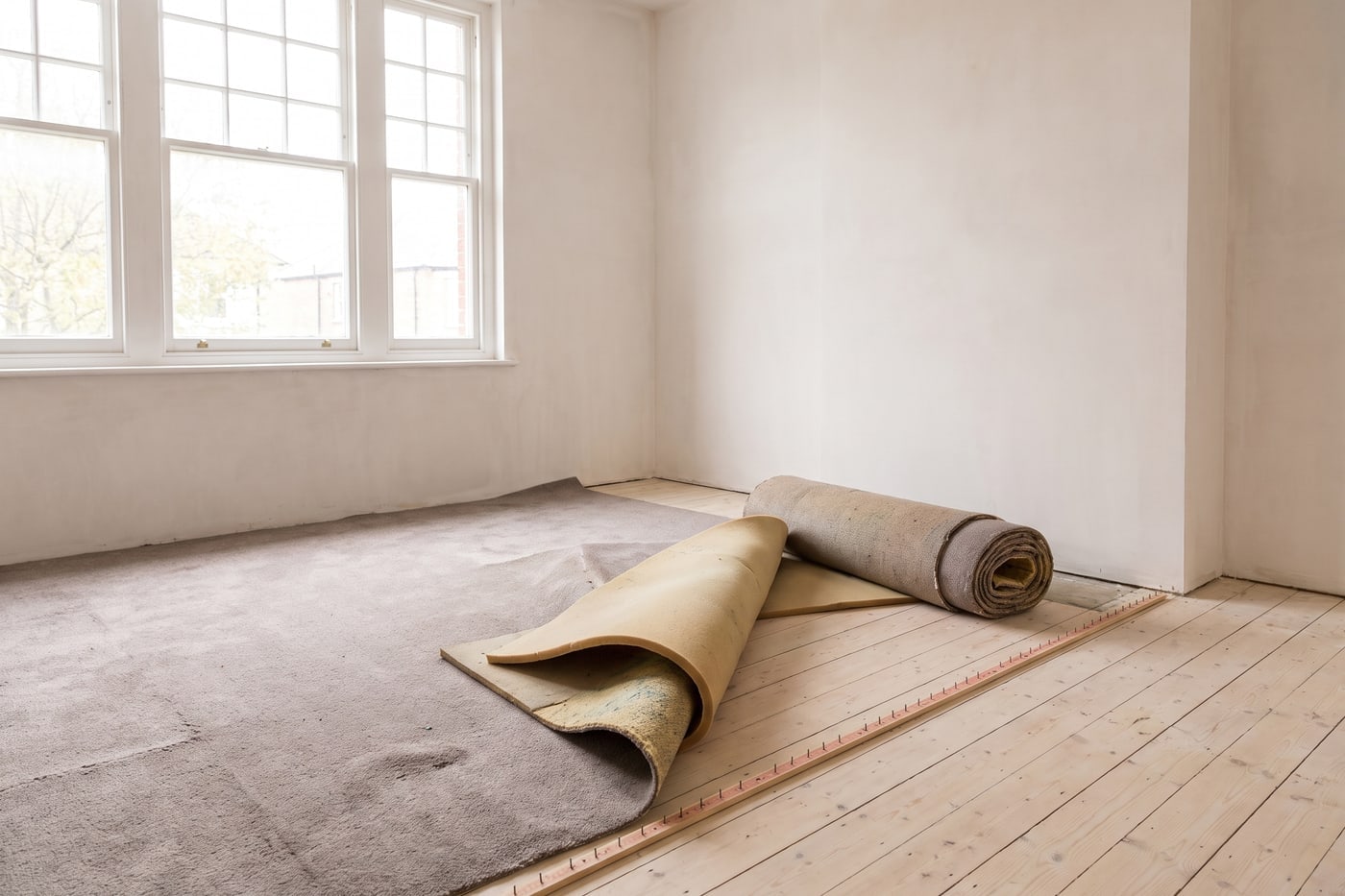
The most straightforward removal there is. Cut the carpet into manageable strips, roll them, and lift the underlay beneath.

What takes the time is the smooth edge — the tack strip around the perimeter — and the hundreds of staples holding the underlay down. Both have to come out completely, because anything left proud will telegraph through a floating floor.

Check the subfloor as you go, and stop if you uncover old vinyl or tiles you were not expecting.

Old carpet cut and rolled back in an empty room to reveal the floorboards and tack strip beneath

Floating timber, laminate and hybrid

A floating floor is not fixed down, which makes it the easiest thing to remove. Take off the scotia or skirting, start at a wall, and unclick the boards in reverse order to how they went in — lift the long edge to disengage rather than pulling upward.

If the boards are in good condition and you are removing them for a change of look rather than because they failed, they are worth keeping intact.

Underneath you will usually find either the original subfloor or a separate underlay, both of which lift easily.

Glued vinyl and vinyl planks

Only after the asbestos question is settled. If the material is confirmed clear, glued vinyl comes up with a floor scraper, and adhesive residue is removed mechanically or with an appropriate remover.

Adhesive residue matters more than people expect. A floating floor over a lumpy bed of old glue will telegraph every ridge, and a residue that stays soft can interfere with the new floor entirely. The substrate has to be clean and flat before anything goes back down.

This is the job most likely to be worth handing over. It is slow, physical, and the surface preparation afterwards determines the quality of the finished floor.

Tiles: remove, or float over?

Often you do not need to remove them at all. A hybrid or laminate floating floor can usually go straight over existing tiles, provided the tiles are sound, well bonded and flat enough, and the added height still works at doorways and thresholds.

Floating over avoids the dust, the disposal and a substantial amount of labour, which is why it is worth checking before committing to demolition.

You do need to remove them if tiles are drummy or lifting, if grout lines are wide or deep enough to leave the new floor unsupported, or if the height build-up causes a problem at a door, a kitchen kick or a threshold. Our subfloor guidance covers the flatness requirement in detail.

Disposal

Old flooring is heavier and bulkier than it looks, and most of it will not fit in a household bin. Carpet, underlay and timber usually go to a transfer station; tiles and mortar are heavy enough that weight rather than volume sets the cost.

Asbestos material is a separate matter entirely. It must be handled and disposed of by a licensed professional at a facility approved to receive it. It never goes in a skip.

What we remove, and what is quoted separately

Removal and disposal of existing floor coverings is a service we offer, and it is quoted as its own line rather than folded into a square-metre installation rate. So are subfloor preparation, waste removal, furniture moving, stairs, door trimming and skirting.

Quoting them separately is deliberate. It means you can see what each part costs and decide what to take on yourself, rather than paying for a bundle you cannot see inside.

Suspected asbestos material is the exception: we do not remove it, and it needs a licensed professional before we can start.

Common questions

How do I know if my old vinyl flooring contains asbestos?

You cannot tell by looking. Age and material type tell you whether to be suspicious — vinyl sheet, vinyl tiles, their backing and adhesive in a pre-1990s Australian home are all candidates — but only testing gives an answer. If in doubt, have it assessed before anything is disturbed.

Will you remove asbestos flooring?

No. Suspected asbestos material is not disturbed or removed by our installers. It needs assessment and, where required, removal by a suitably qualified and licensed asbestos professional before flooring installation proceeds.

Do I have to remove tiles before laying hybrid flooring?

Usually not. A floating floor can generally go over sound, well-bonded, flat tiles provided the added height still works at doorways. Remove them if they are drummy or lifting, if grout lines are wide enough to leave the floor unsupported, or if height becomes a problem.

How do you remove a floating floor?

Take off the scotia or skirting, start at a wall and unclick the boards in reverse order, lifting the long edge to disengage rather than pulling straight up. Undamaged boards can often be kept intact.

Does old adhesive need to come off?

Yes. A floating floor over lumpy adhesive telegraphs every ridge, and residue that stays soft can interfere with the new floor. The substrate must be clean and flat before the new floor goes down.

Do you charge for removing the old floor?

Removal and disposal is quoted as its own line rather than bundled into the installation rate, so you can see what it costs and decide whether to take it on yourself.

Ready to Request a Quote?

Browse the catalogue, shortlist your preferred range, and send us your project details for direct-to-market pricing.