Living with it

Got a Dog? No Floor Is Scratch-Proof. Here's What Helps

No floor is scratch-proof. What dogs actually do to hybrid and laminate, why grit matters more than claws, and the habits that keep a floor looking new.

The short answer

Hybrid handles claws better than timber, but no floor is scratch-proof. Keep nails trimmed, stop grit at the door with mats, wipe up accidents and water-bowl spills promptly, and put rugs on the routes your dog runs. Choose hybrid over laminate if accidents or spilled water are likely.

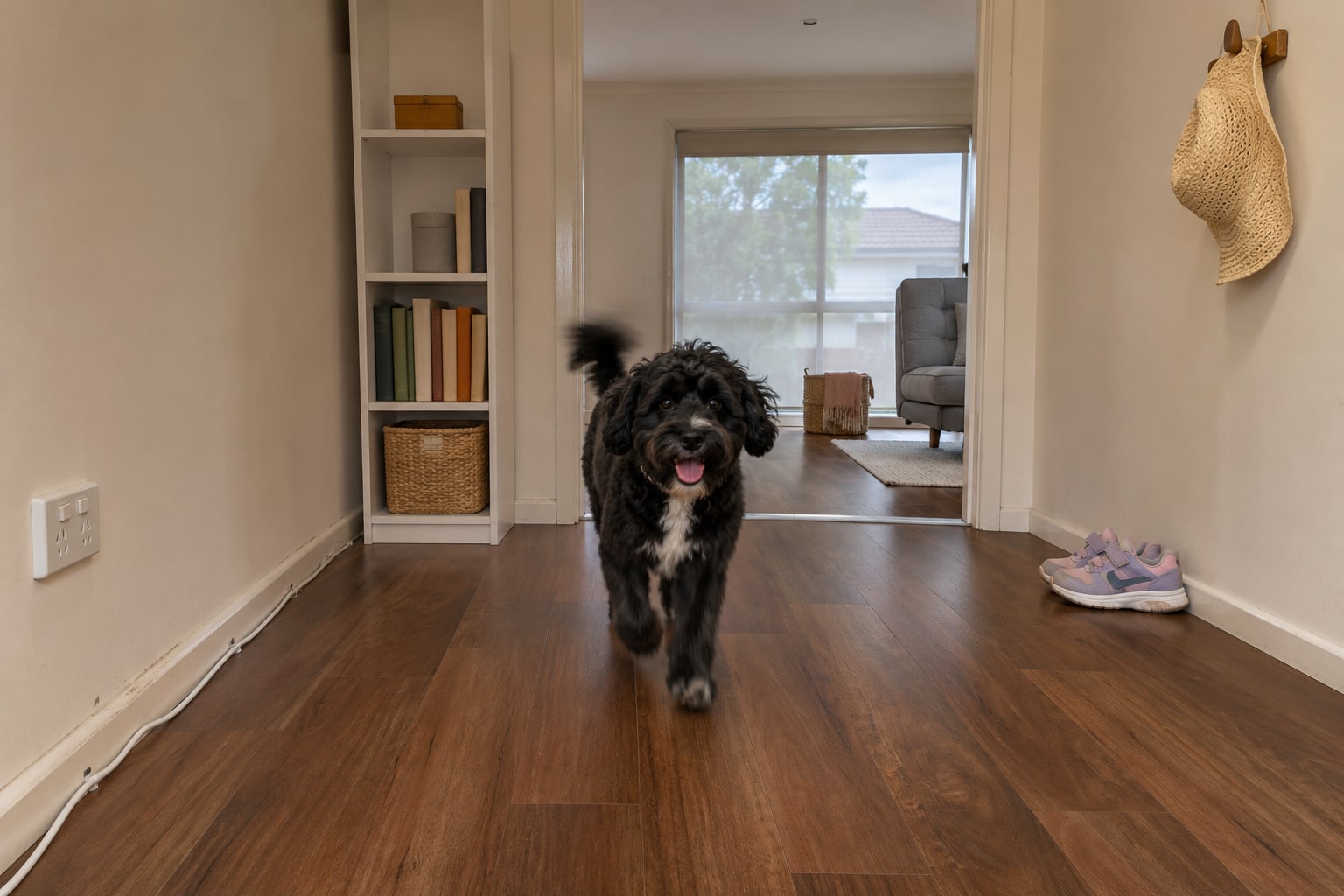
A black cavoodle trotting down a hallway with a dark timber-look floor towards the camera

Last reviewed November 2026

The honest answer first

Every flooring shop gets asked which floor is best for dogs, and too many answer with a word that does not exist: scratch-proof. No hybrid, laminate, timber or tile floor is scratch-proof. Anyone who tells you otherwise is setting you up for an argument later.

What is true is that hybrid handles claws better than timber, and that the everyday clicking of a dog walking around the house is rarely what wears a floor. The real question is what makes the difference between a floor that still looks good in five years and one that does not, and most of it is under your control.
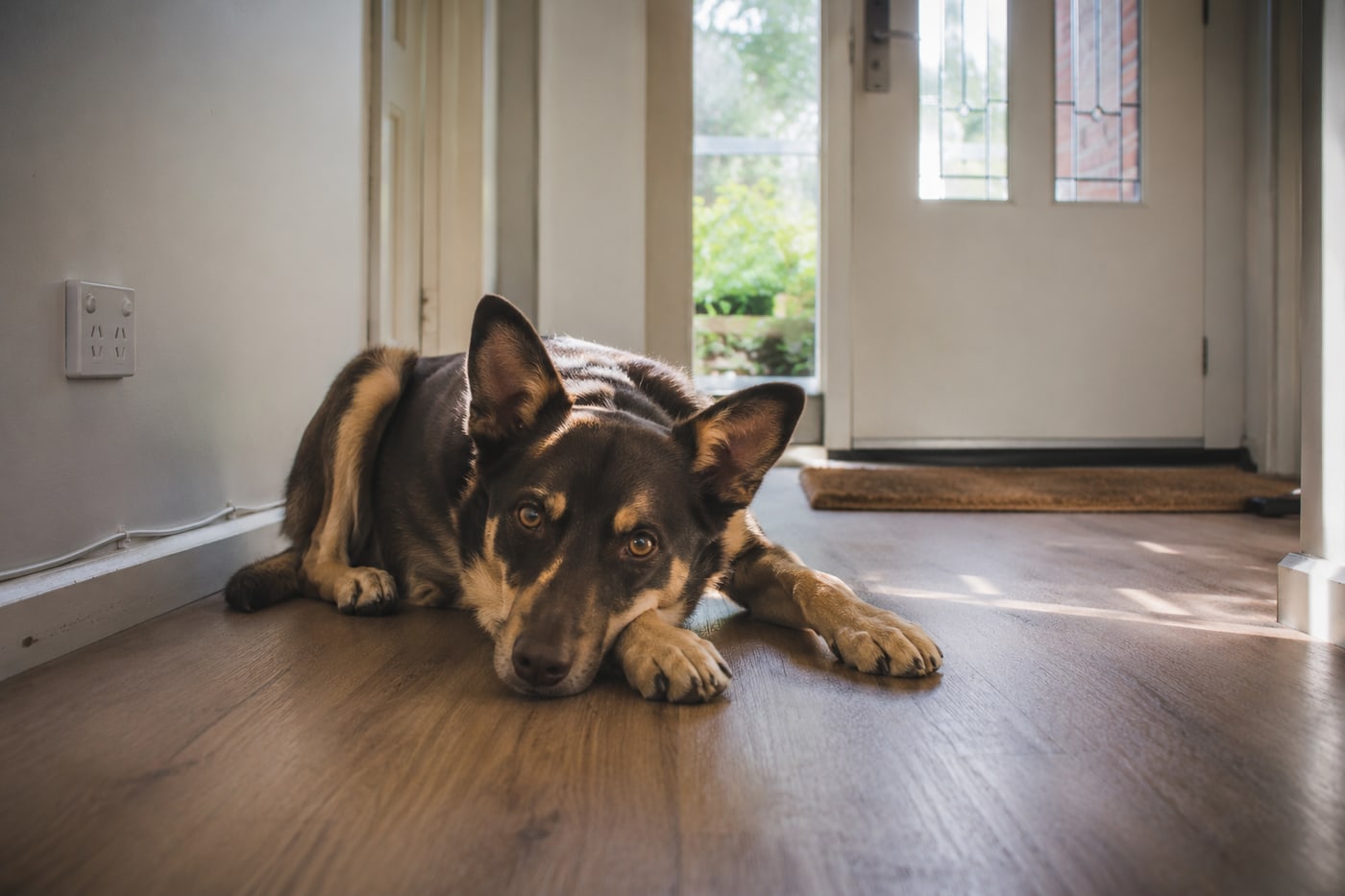
A kelpie lying with its head on its paws on a timber-look hallway floor, the front door open behind it

It's the grit, more than the claws

A dog coming in from the garden carries sand and grit on its paws, and a dog running and skidding drags that grit across the floor. Grit under a paw, or under a chair leg, acts like fine sandpaper. That is what leaves the fine scratches people notice in a high-traffic patch.

So the most effective pet habit is not about the dog at all. It is a mat at every door the dog uses, and a quick sweep or vacuum of those entry paths more often than the rest of the house.

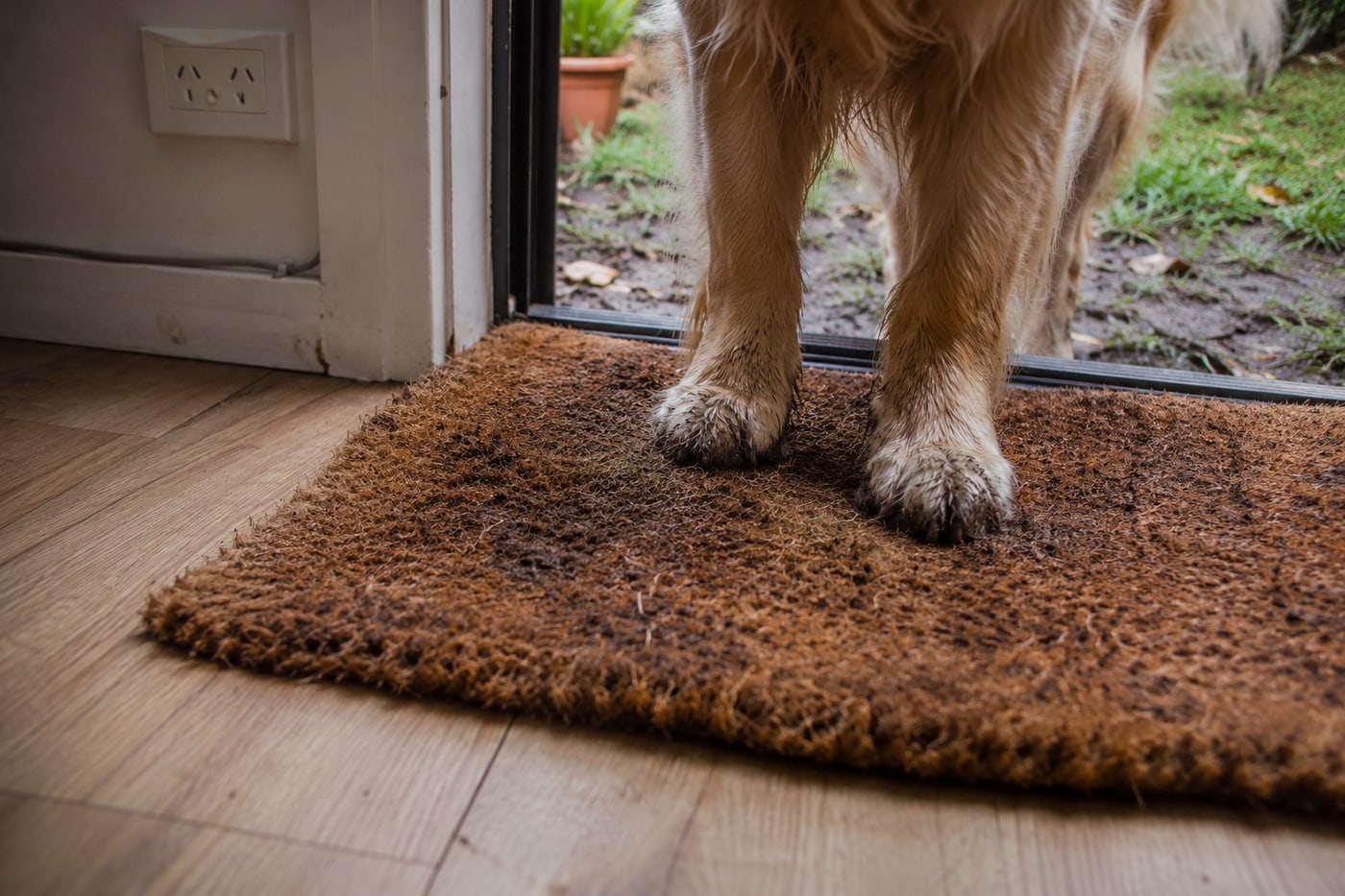
A dog's front paws on a coir doormat at a back door, a timber-look floor inside

Five habits that keep a floor looking new

None of these costs much, and together they do more than any product choice.

  1. Keep nails trimmed. Long nails dig in; short nails mostly do not touch the floor.
  2. Put mats at every door the dog uses, and sweep or vacuum those paths often.
  3. Put rugs or runners on the dog's racetrack: the hallway sprint, the turn at the back door, the spot by the food bowl. They protect the floor and give an older dog better grip.
  4. Wipe up accidents and water-bowl spills promptly. The core is waterproof, but the joins are tight, not sealed.
  5. Felt pads under furniture still matter. A dog bumping a dining chair across the floor moves grit with it.

Accidents, water bowls and wet paws

This is where the choice between hybrid and laminate really matters for pet owners.

Hybrid has a waterproof stone plastic composite core. A water bowl that tips over while you are out is a non-event, and a toilet-training accident cleaned up when you get home will not swell the boards. The one thing to remember is that click joints are tight, not sealed: liquid left standing for hours can work its way down into a join, so clean it up when you find it.

Laminate is different. Our TITAN 12mm laminate has a high-density fibreboard core, which swells permanently if water reaches it. It is a hard-wearing floor for dry rooms, but in a house with a puppy, an elderly dog or a bowl that gets knocked over, hybrid is the safer choice for the rooms the dog lives in.

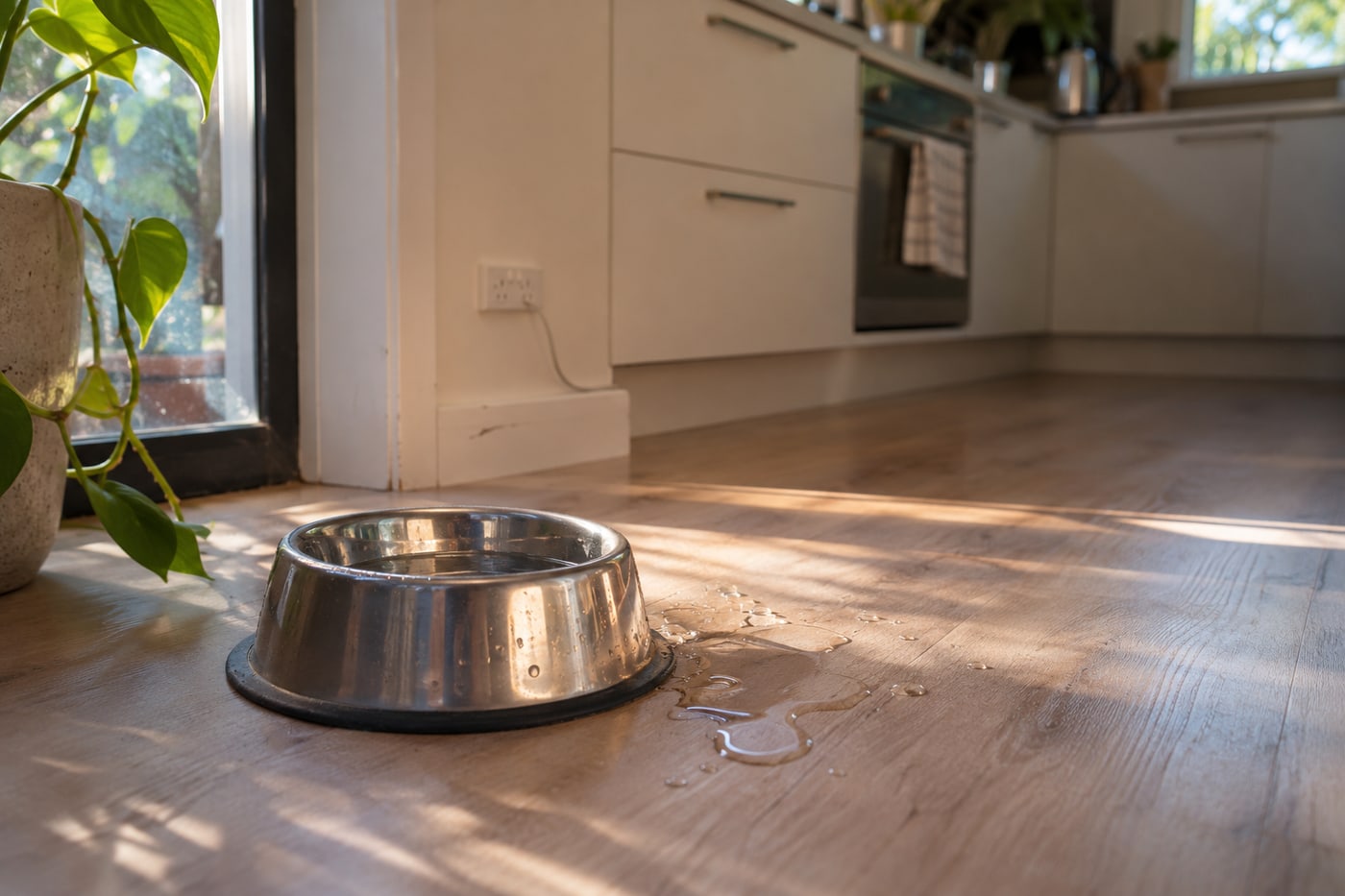
A stainless steel dog water bowl on a timber-look kitchen floor with a small splash of water beside it

What wear layers and AC ratings do and don't tell you

Hybrid is sold by wear layer thickness (SILVA and AXEN both have a 0.5mm wear layer), and laminate by AC rating (TITAN is AC4). Both describe how the surface stands up to abrasion over years of foot traffic: how long before it wears through.

Neither is a scratch rating. A higher AC rating or a thicker wear layer does not mean a claw or a dragged chair cannot mark the surface. Use them to compare how long floors last in busy homes, not as a promise about pets.

Choosing a colour with a dog in the house

Fine marks show least on a floor with plenty of grain and a mid tone. Very dark, flat colours show dust, paw prints and light scratches the most; very pale ones show dirt from outside.

The best test is a real one. Order free samples of the colours you like, put them on the floor where the dog runs, and look at them in your own light for a week. You can also run a key across the back corner of a sample to see how a mark reads on that colour.

If you rent

In Victoria, Consumer Affairs Victoria's guideline on damage and fair wear and tear treats floors that are badly scratched or gouged by claws or bite marks as damage, not as fair wear and tear. Normal light wear is a different matter.

The habits above are the best protection for your bond: trimmed nails, mats at the doors, rugs on the busy paths, and photos of the floor at the start of the tenancy.

Common questions

Is hybrid flooring good for dogs?

It handles claws better than timber and its core is waterproof, which helps with accidents and water bowls. No floor is scratch-proof, so trimmed nails, mats at the doors and rugs on busy paths still matter.

Will my dog scratch a hybrid floor?

Everyday walking usually does little. Fine scratches mostly come from grit dragged under paws or furniture, and from long nails on a skidding dog. Mats, regular sweeping and trimmed nails prevent most of them.

Hybrid or laminate for a house with pets?

Hybrid, for the rooms the dog lives in. Its core is waterproof; laminate's fibreboard core swells permanently if water from an accident or a tipped bowl reaches it.

Does a higher AC rating mean a floor won't scratch?

No. AC ratings and wear layer thickness describe resistance to abrasion over years of foot traffic, not resistance to scratches from claws or dragged furniture.

Ready to Request a Quote?

Browse the catalogue, shortlist your preferred range, and send us your project details for direct-to-market pricing.