Living with it

Moving the Fridge Across a New Floor? Do This First

Felt pads, lifting not dragging, castors, heels and rugs: how to host, move and live on a hybrid or laminate floor without marking it.

The short answer

Put felt pads under every furniture leg and replace them as they wear. Lift heavy furniture rather than dragging it, and lay hardboard or use furniture sliders when something has to slide. Use a mat under castor chairs, a doormat at every entrance, and keep stilettos and sports cleats off the floor.

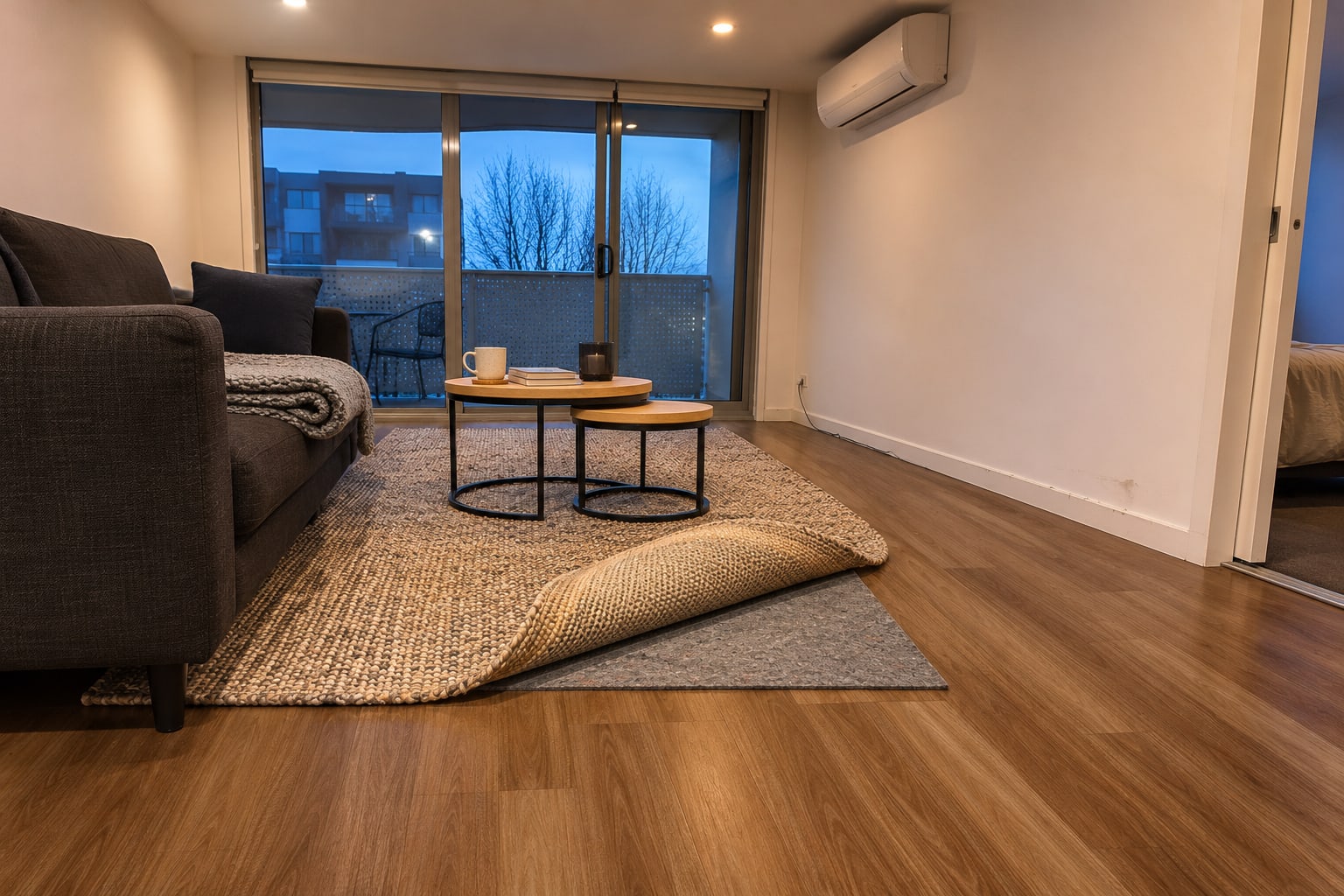
A woven rug folded back to show the felt underlay beneath it, on a timber-look floor in a living room

Last reviewed November 2026

What actually marks a floor

Hybrid and laminate floors wear well, but nothing is scratch-proof or dent-proof. When a floor gets marked, it is almost always one of three things: grit dragged under something, a small hard point carrying a lot of weight, or a heavy object slid across the surface.

The good news is that all three are cheap to prevent, and most of the prevention happens once, on the day the furniture goes back in.
Felt pads, and the part everyone forgets

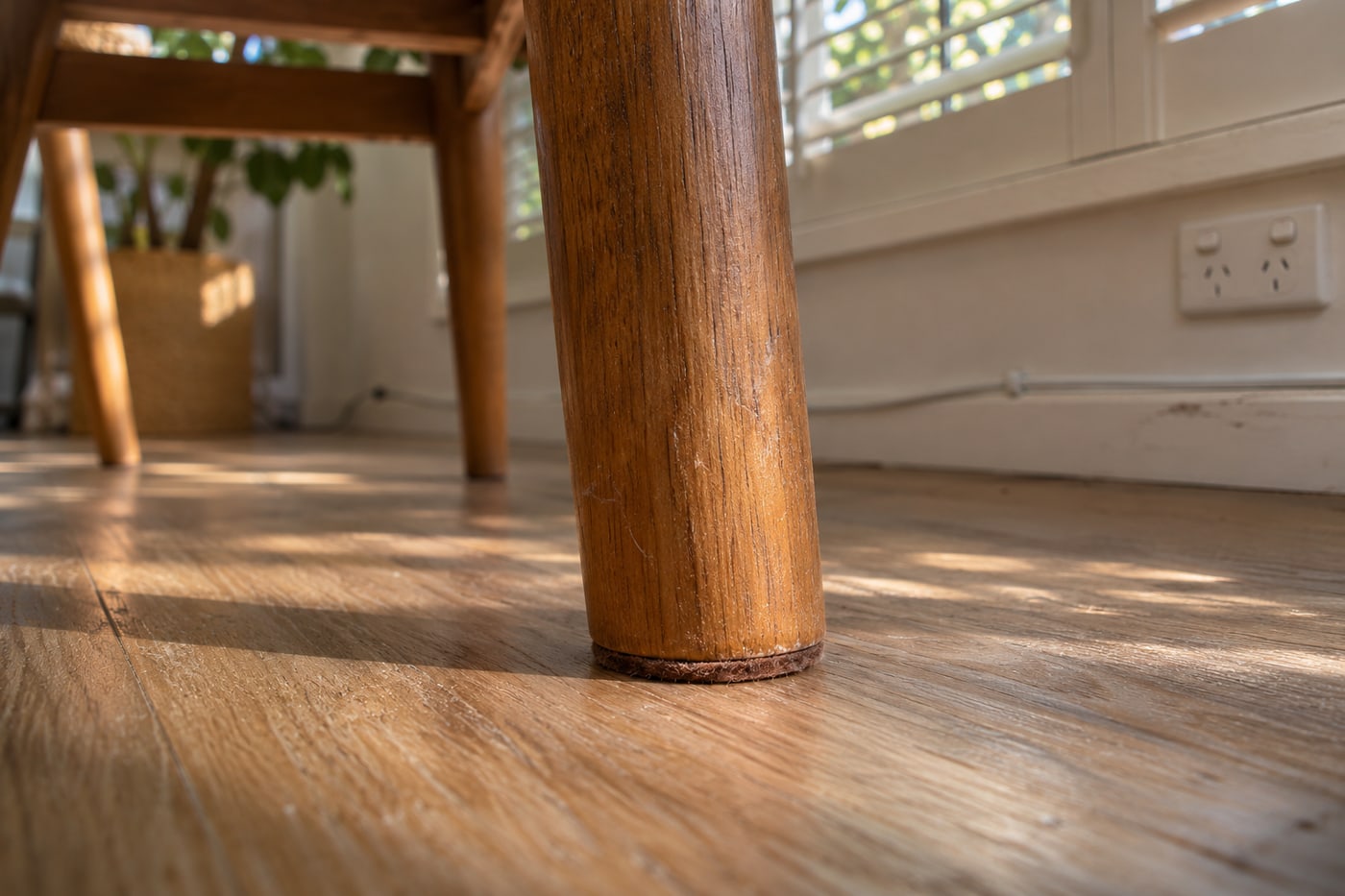
Felt protector pads on the legs of all furniture prevent scratches and dents. That part most people do.

The part they forget is that felt wears down and collects grit. A pad that has worn through, or that has picked up sand from the floor, becomes the very thing it was meant to stop: a small abrasive patch under a chair that moves every day. Check the pads on dining and kitchen chairs a few times a year, and replace any that are thin, hard or dirty.

Bigger is better. A wide pad spreads a heavy piece's weight; a tiny one concentrates it.

A close view of a timber chair leg resting on a timber-look floor in morning light

Moving furniture: lift, don't drag

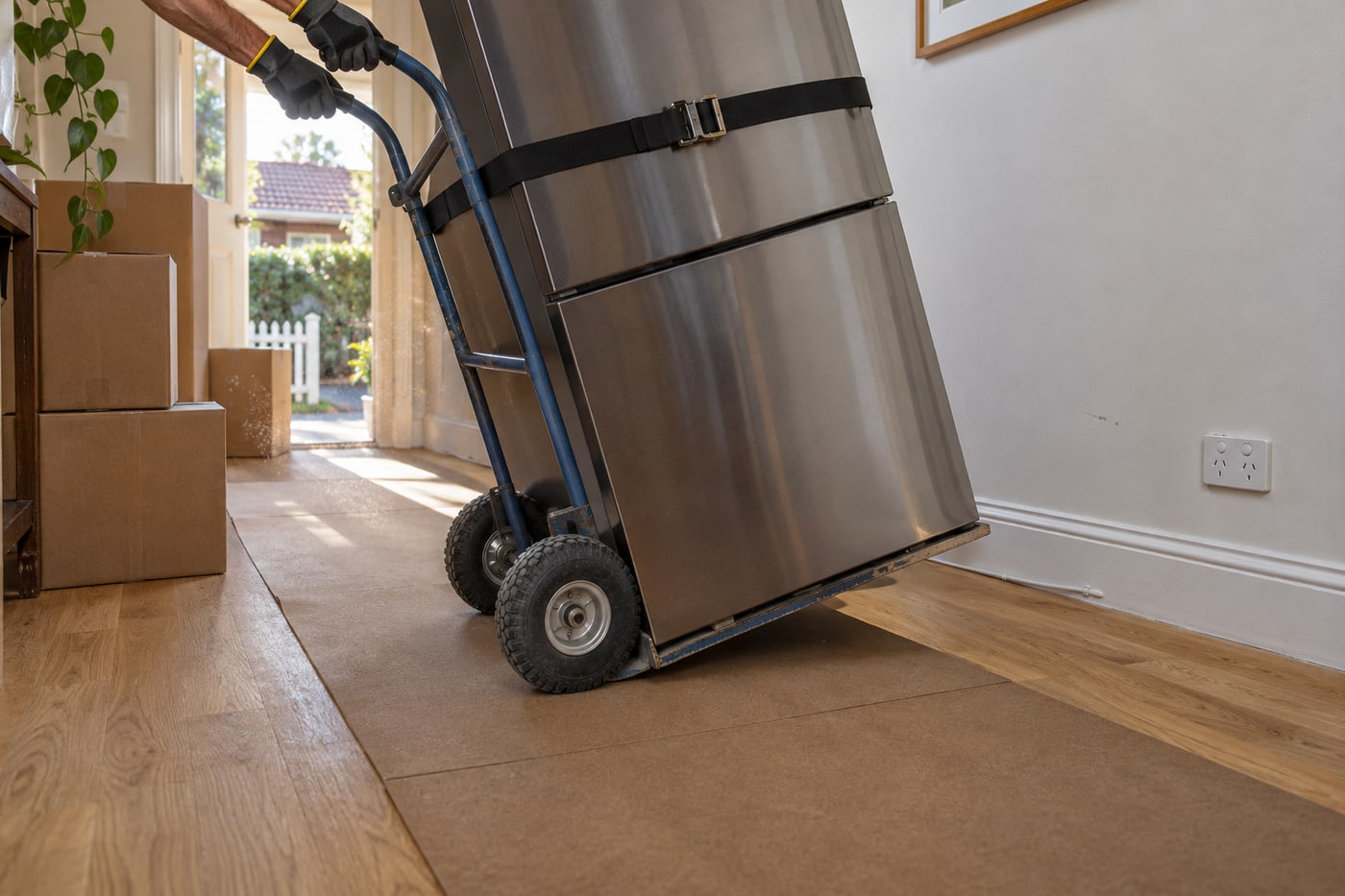
When moving heavy furniture, lift rather than drag. If dragging is unavoidable, put protection down first: furniture sliders under the legs, or sheets of hardboard laid over the floor for the fridge, piano or wardrobe to travel on.

This matters most on move-in day and after a new install, when everything goes back into the room at once and nobody is watching the floor. Hardboard costs very little at a hardware store; a gouge across the middle of a living room does not.

  1. Lay hardboard (smooth side down) along the path before sliding anything heavy.
  2. Empty heavy cabinets and drawers before moving them.
  3. Use a trolley with soft wheels for appliances, rolled over hardboard, not straight on the floor.
  4. Put felt pads on before the furniture goes down, not after.
A fridge on a hand trolley being wheeled over hardboard sheets laid along a hallway floor, moving boxes beside it

Office chairs and anything on castors

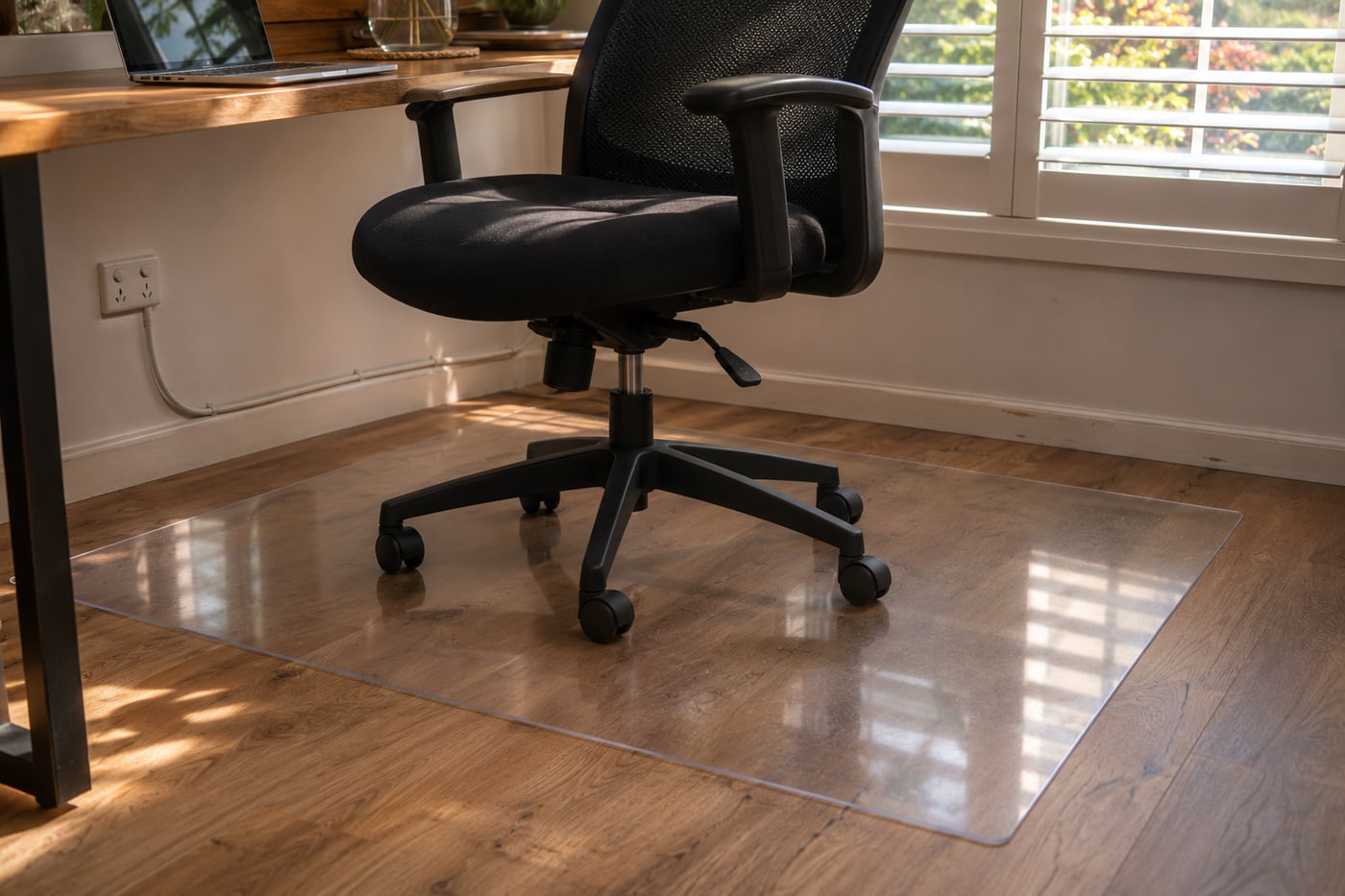
A chair on castors rolls back and forth over the same small patch hundreds of times a day, and the wheels pick up grit as they go. Put a chair mat under desk chairs, and check that the castors are the soft type made for hard floors.

The same goes for anything else on wheels that moves often: kitchen trolleys, kids' ride-ons, a vacuum with hard wheels.

An office chair on castors standing on a clear chair mat over a timber-look floor, plantation shutters behind

Heels, cleats and the Christmas party

High-heeled shoes and sports cleats can cause indentations and damage to the floor surface. A stiletto concentrates a person's full weight onto a point the size of a fingernail.

If you are hosting, a basket at the door and a polite word about shoes saves a lot of worry. Doormats at every entrance trap the sand and grit that do most of the damage, and they matter even more on a summer day when people are walking in from the garden or the beach.

Rugs and mats

Rugs are good for a floor: they take traffic, soften noise and protect high-wear spots. Two things to watch.

First, the backing. Some rubber and latex backings can mark or discolour hard floors over time, so choose rugs and mats sold as suitable for hard floors, or put a breathable underlay beneath them.

Second, the sun. Prolonged direct sunlight can cause fading, and a rug that never moves leaves the floor underneath it at its original shade. Shift rugs now and then, and use curtains or blinds on sunny windows.

Heavy built-ins are a different question

Felt pads deal with marks. Very heavy, permanent pieces raise a different problem: a floating floor has to be able to move, and anything fixed on top of it stops that.

A stone-topped island or built-in cabinetry should sit on the subfloor, not on the floating floor, wherever the design allows. The floor then runs up to it, with its expansion gap, and can still move as one sheet around it. If you are planning a kitchen, talk to us before the cabinets go in.

Common questions

Do I need felt pads on a hybrid floor?

Yes. Felt pads on all furniture legs prevent scratches and dents. Check and replace them regularly, because worn or gritty pads stop protecting the floor and can start marking it.

Can I use an office chair on hybrid or laminate?

Yes, with a chair mat underneath. Castors roll over the same spot constantly and pick up grit, which wears the surface over time.

How do I move a fridge on a new floor?

Lift rather than drag where you can. If it has to slide, lay hardboard along the path or use furniture sliders, and roll it on soft wheels over the hardboard rather than across the floor.

Can I put a rug on a hybrid floor?

Yes. Choose rugs and mats sold as suitable for hard floors, since some rubber and latex backings can mark a floor over time, and move rugs now and then so sunlight reaches the floor evenly.

Can a kitchen island sit on a floating floor?

Preferably not. Where the design allows, a heavy fixed island or built-in cabinetry should sit on the subfloor, so the floating floor can still move around it with an expansion gap.

Ready to Request a Quote?

Browse the catalogue, shortlist your preferred range, and send us your project details for direct-to-market pricing.