Living with it

Your Floor in a 40°C Week: Sun, Glass and Heat

What a Melbourne summer does to a floating floor behind north and west glass: fading, movement, and the few habits that prevent both.

The short answer

Two things happen to a floating floor in strong sun: prolonged direct sunlight can fade it, and heat makes it expand. The expansion gap at every wall lets it move without buckling, so keep that gap clear. Curtains or blinds on north and west glass during the hottest hours prevent most of the rest.

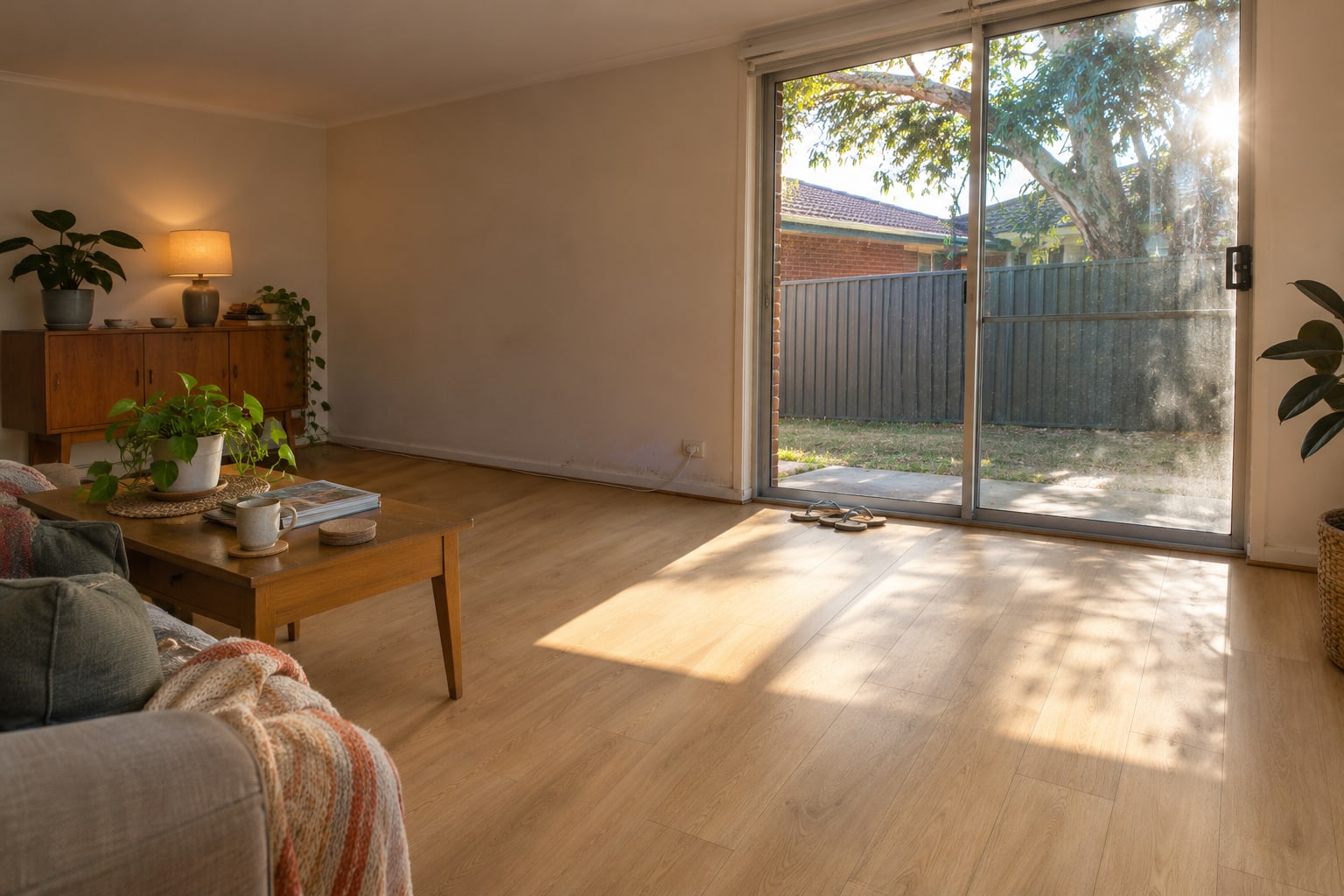
Late sun through a sliding glass door laying a bright patch across a timber-look floor in a living room

Last reviewed November 2026

What a Melbourne summer actually brings

Melbourne averages around ten days a year at 35°C or hotter, and almost all of them fall between December and February. January carries the most. The city has reached 46°C, and last summer Olympic Park hit 42.9°C on 9 January 2026.

The air temperature is only half of it. A floor in full sun behind a large north- or west-facing window gets far hotter than the room around it, because the glass lets the sun in and the floor absorbs it. A plank in a sunny patch and a plank in the shade a metre away can be living in two different climates on the same afternoon.

That difference, more than the number on the weather app, is what a floating floor responds to.
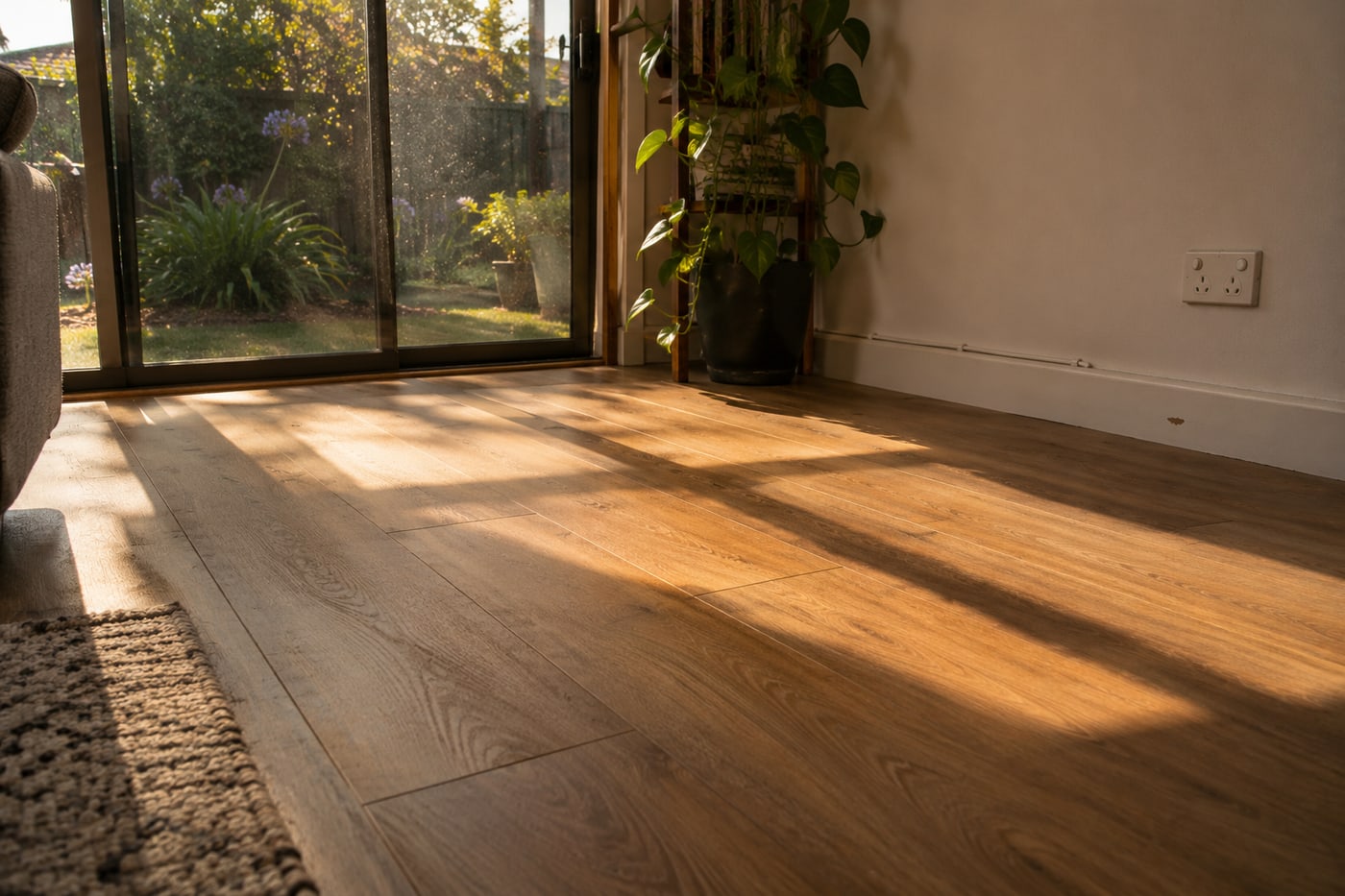
Late-afternoon sun through a sliding glass door laying bright bands of light across a timber-look floor

Fading: the slow one

Our own care guide puts it plainly: prolonged direct sunlight can cause fading. The decor layer of a hybrid or laminate plank is a printed image under a protective surface, and like most things left in strong sun for years, its colour can shift.

It happens slowly and evenly, which is why people usually notice it by accident. Move a rug that has sat in the same spot for two summers and the floor underneath can be a slightly different shade from the floor around it.

The fix is the same one that protects a couch or a timber table: curtains or blinds on the windows that get direct afternoon sun, drawn during the hottest part of the day. Moving rugs and furniture around now and then keeps any change even.

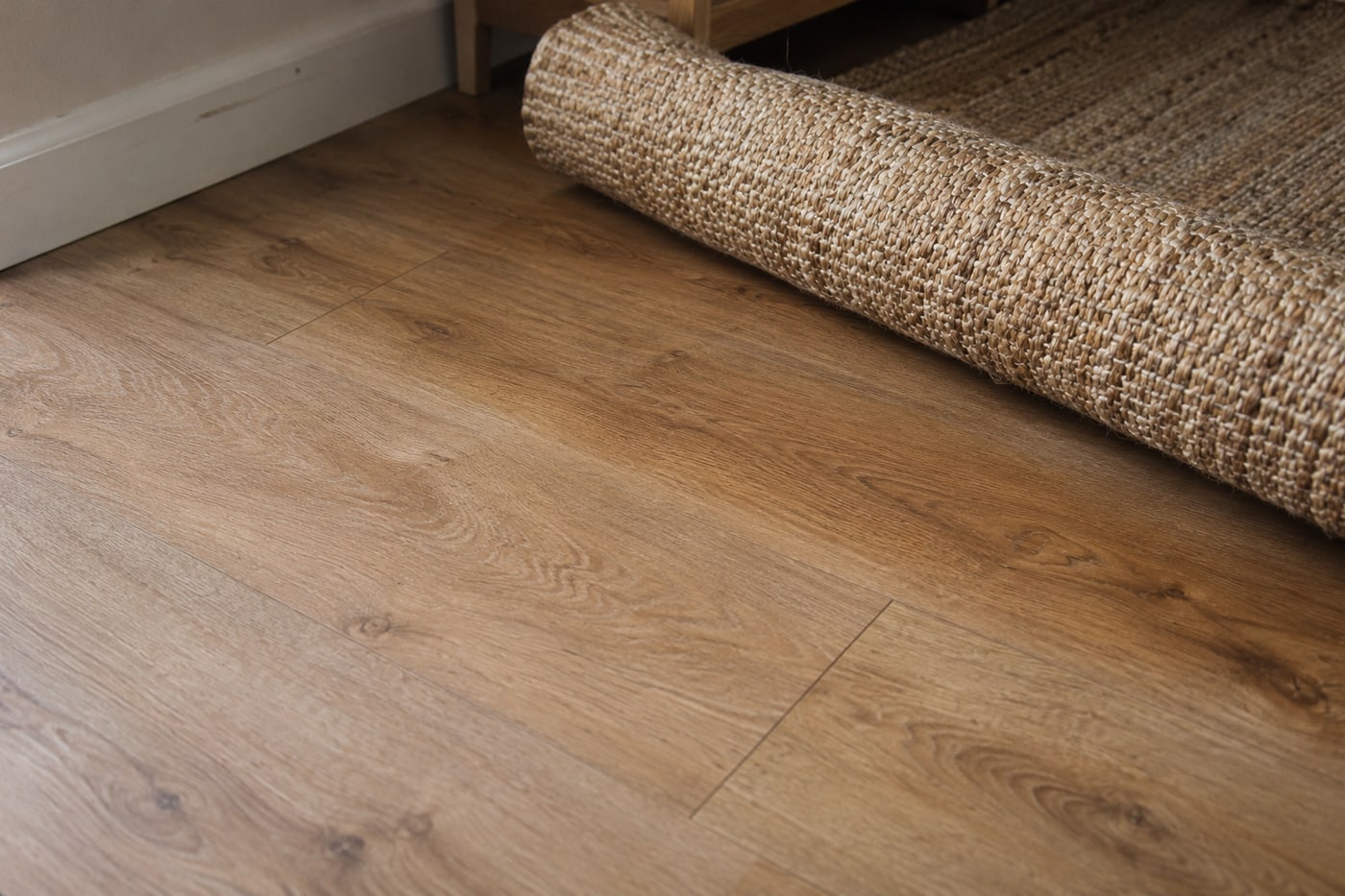
A jute rug rolled back from a timber-look floor beside a white skirting board

Movement: the one people worry about

Hybrid and laminate are floating floors. They are not glued or nailed down, and they are designed to expand and contract slightly as the temperature and humidity change. Summer is when they expand.

That is exactly what the expansion gap is for. Our installation and care guide calls for a gap of approximately 8 to 10mm along all walls and fixed objects, so the floor can move naturally without buckling. Skirting or scotia covers the gap, fixed to the wall and never through the floor.

Where floors get into trouble in summer is almost always where something has taken that freedom away: the gap was never left, it has been filled with silicone, a skirting board was nailed through the floor, or a heavy built-in sits on top of it. A floor that cannot move outward moves upward instead, and the joins peak.

Heat damage of that kind is not treated as a product fault. The SILVA and AXEN warranties both exclude movement, gapping and joint damage caused by excessive heat, which is one more reason the gap matters.

What to do in a hot week

None of this takes more than a minute, and it does more than anything else you can buy.

  1. Draw curtains or blinds on north- and west-facing glass for the hottest hours, especially floor-to-ceiling windows and sliding doors.
  2. Keep the expansion gap clear. Do not let anyone silicone the edge of the floor, and do not add trims or door stops that screw through it.
  3. Move rugs and floor mats every few months so the floor under them and around them sees the same light.
  4. Wipe up anything spilled near a hot window promptly; sun-baked spills are harder to lift later.
  5. If gaps open between boards on a scorching day and close again when it cools, that is the floor doing its job. If a join stays peaked, read on.
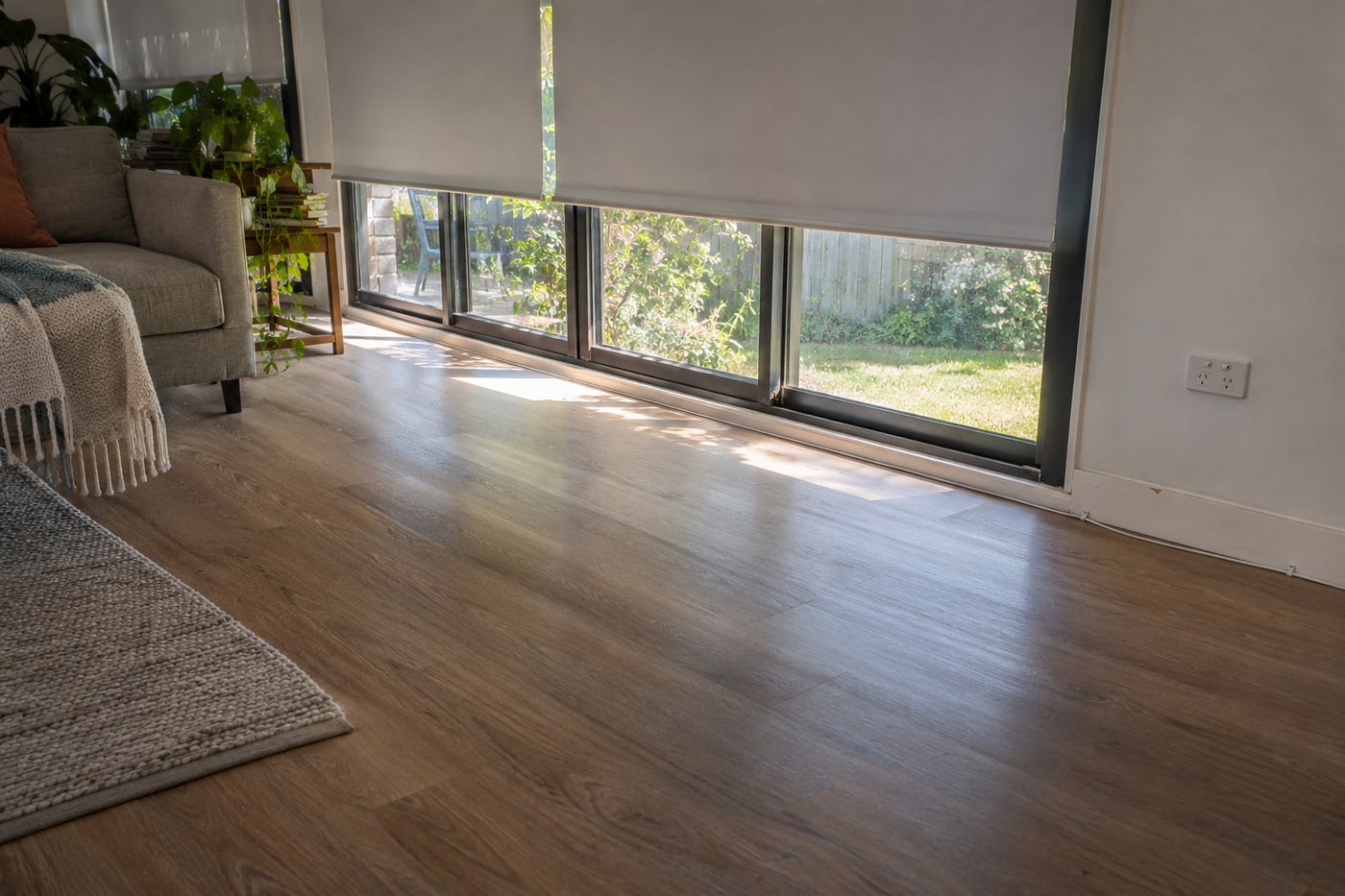
White roller blinds lowered on a wall of windows, leaving a timber-look floor in soft, even shade

Planning a floor for a sunny room

If the room you are flooring has a wall of glass facing north or west, plan the window covering at the same time as the floor. Blinds, curtains, external awnings or a window film are all far cheaper than replacing boards.

Unshaded conservatories are the one place we steer people away from: prolonged direct sun on a space that is effectively a glasshouse causes expansion a floating floor is not designed to keep absorbing. Enclosed, climate-controlled rooms are what these floors are made for.

Very large open-plan areas also need thought. Our manufacturer's limit is a maximum continuous area of 12m × 12m before an expansion joint or transition; beyond that, the floor needs a break so each section can move on its own.

Maximum continuous area before a joint by collection
CollectionMaximum continuous area before a joint
SILVA 7mm Hybrid12m × 12m
AXEN 9mm Hybrid12m × 12m
TITAN 12mm Laminate12m × 12m
Maximum continuous area before an expansion joint or transition Confirmed by our manufacturer, September 2026.

If your floor has already moved

Small gaps that open in the heat and close in cooler weather are normal movement. Joins that stay raised, boards that feel springy, or a floor that has lifted along one wall are signs that something is pinning it.

The honest fix is to find what is holding the floor and free it, not to force the boards back down. If a heatwave has left you with peaked joins, send us a photo and we will tell you what we think is causing it.

Common questions

Does hybrid flooring fade in the sun?

Prolonged direct sunlight can cause fading, as it can with most furnishings. Curtains or blinds on windows that get strong direct sun, and moving rugs now and then, keep any change slow and even.

Will a hybrid floor expand in summer?

Yes, slightly. Floating floors expand with heat and contract as it cools, which is why an expansion gap of approximately 8 to 10mm is left at every wall and fixed object. Keep that gap clear and the movement stays invisible.

Can I put hybrid flooring in a sunroom?

Not in an unshaded conservatory: prolonged direct sun there causes expansion. An enclosed, climate-controlled room with blinds or curtains on its sunny windows is fine.

Why have gaps appeared between my boards on a hot day?

Boards that open slightly in a heatwave and close again when it cools are moving as a floating floor should. Joins that stay raised usually mean the floor is pinned somewhere, by a filled expansion gap, a fixing through the floor or a heavy built-in.

Ready to Request a Quote?

Browse the catalogue, shortlist your preferred range, and send us your project details for direct-to-market pricing.